By General Elias Farhat*
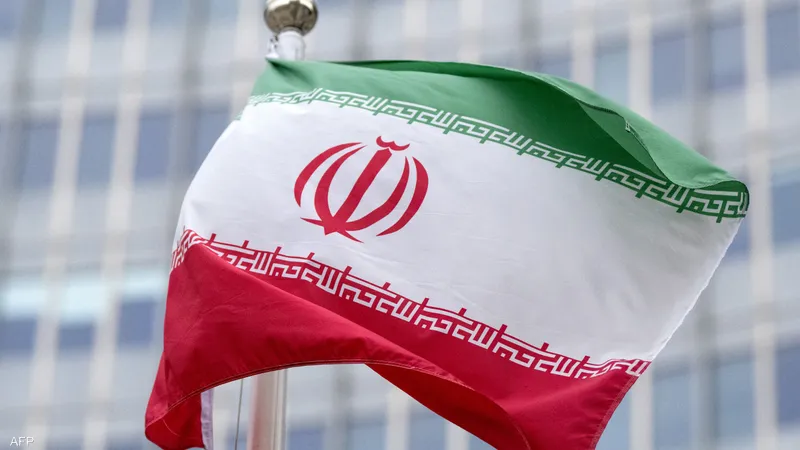
Iran is a large country with an area of 1,600 square kilometers and a population of approximately 88 million. Its location is strategic, bordering seven countries, most notably Iraq, Turkey, and Pakistan, and it overlooks the Persian Gulf, the Indian Ocean, and the Caspian Sea. The Iranian nation comprises several ethnic groups, the largest being the Persians, followed by the Kurds, Arabs, and Baloch. The predominant religion is Islam, specifically Shia Islam, which is practiced by about 85% of the population, while 12% adhere to Sunni Islam.
There are no significant political parties. Iranians generally fall into two main political blocs: conservatives and reformists, who alternate in power. The current president, Pezeshkian, is a reformist, while his predecessor, Raisi, was a conservative.
Throughout its history, Iran has been ruled by monarchies, the last of which was the Pahlavi dynasty, overthrown by the Islamic Revolution in 1979. Islamic Iran has adopted an anti-Western policy, resulting in significant hostility between Iran and the West, particularly the United States. One of the most important stances of Islamic Iran is its adherence to the rights of the Palestinian people and its intense hostility towards Israel. Immediately after the victory of the revolution, it expelled Israeli diplomats and handed the Israeli embassy over to the Palestine Liberation Organization (PLO).
Since the victory of the revolution in 1979, Iran has been subject to US sanctions. Iran’s radical stance has led to various forms of hostility with the West and to the imposition of economic sanctions by the United States, other countries, and sometimes the United Nations, which have limited growth and triggered various crises. Furthermore, the Iran-Iraq War of 1980-1988 drained much of Iran’s resources. Iran has contributed to the conflict with Israel and supported resistance movements, from the PLO to Hamas, Hezbollah, Islamic Jihad, and others. This has elevated it to the forefront of Israel’s enemies and subjected it to Israel’s political, economic, and media power.
The protests
Iran has witnessed large-scale popular protests, most notably in 2009 due to a dispute over the presidential election results, in 2017 due to the high cost of living, in 2019 (part of the protests in Iraq, Lebanon, and Hong Kong in China) in protest against corruption and the economic situation, and in 2022 after the murder of a Kurdish girl who was beaten for wearing a hijab, a crime with cultural, religious, and ethnic dimensions.
The current protests began following a significant and sudden rise in the dollar exchange rate and the subsequent price hikes. These protests were initiated by groups from the middle and lower classes in the bazaar of Tehran, the capital, and were particularly concentrated in the predominantly Kurdish provinces of Ilam and Kermanshah. For the first time, international media reported calls for the removal of Supreme Leader Khamenei, as well as attacks and arson targeting religious centers such as mosques and shrines, in addition to clashes with the police and Basij militia.
Foreign intervention has added significant and violent momentum to the protests. The funerals of more than 300 security personnel and some images of the violence reveal the presence of armed elements firing on the police. Foreign Minister Araqchi presented the diplomatic corps with photos and evidence of the involvement of armed groups linked to foreign entities in the violence.
President Trump’s statements, including threats to strike Iran and assassinate its leader, and former Secretary of State Mike Pompeo’s remarks about the role of the Israeli Mossad, were clear indicators of foreign interference.
As the protests entered their third week and pro-regime demonstrations of millions took place, it can be said that the protests were contained and the situation brought under control, especially after the government’s bold economic decisions that mitigated the crisis. However, this does not negate the regime’s internal damage and its apparent inability to anticipate crises, despite its awareness of the hostile intentions of major and regional powers.
Trump’s threats to bomb Iran and change the regime also contributed to a large segment of the protesters rallying around the duty to defend the homeland against a foreign invasion, reminiscent of the support for the nascent Iranian revolution after Iraq attacked it in 1980, leading to an eight-year war.
The economic situation and the collapse of the currency: Iran has been subject to US economic sanctions for fifty years. However, it maintained a degree of relations with European countries, Russia, and China. Recently, the Europeans invoked the “snapback mechanism” stipulated in UN Security Council Resolution 2231 of 2015 to reinstate sanctions on Iran that had been lifted following the signing of the 2015 nuclear agreement. The United States, through its maritime and international banking capabilities, has effectively besieged Iranian oil exports, leading to a decline in oil exports, a primary source of hard currency. Trade with neighboring UAE and Turkey has also decreased. Trump’s decision a few days ago to impose a 25% tariff on any country violating the trade embargo against Iran is the latest in a series of pressure measures. This has led to a surge in the dollar’s value, effectively collapsing the Iranian currency, and soaring prices. The poor and middle classes are struggling to cope with the cost of living and are seizing any opportunity to protest.
The Iranian leadership’s stance: Supreme Leader Ali Khamenei considered the recent protests a Western attack on Iran, accusing the United States and Israel of orchestrating it. He called for confronting the protests without making any concessions on Iran’s positions regarding the nuclear program, ballistic missiles, or foreign policy, particularly its support for resistance movements against Israel. Regarding the economic crisis, which Khamenei attributed to the sanctions imposed on Iran, he urged the government to exert all its efforts to find solutions that would alleviate the burdens on the poor.
There is no indication of a settlement with the United States on the nuclear issue, as Iran remains committed to uranium enrichment and possessing a complete nuclear fuel cycle.
President Masoud Pezeshkian, a member of the reformist camp, is open to economically liberal solutions. On the nuclear issue, his position is the same as the Supreme Leader’s: upholding Iran’s rights. Pezeshkian also rejects discussing the Western demand to limit the range of ballistic missiles to a maximum of 500 kilometers, especially after the Israeli Air Force flew approximately 1,500 kilometers to bomb Iranian nuclear facilities.
The Role of the Iranian Armed Forces
The Iranian Armed Forces consist primarily of the Army, which includes ground, naval, and air forces; secondly, the Islamic Revolutionary Guard Corps (IRGC), which also has ground, naval, air, and missile forces; and thirdly, the police and the Basij militia, a type of popular force deployed throughout the country. There are also foreign and domestic intelligence agencies and a Ministry of Intelligence.
The Basij (Mobilization) Forces are a large, volunteer paramilitary militia under Iran’s Islamic Revolutionary Guard Corps (IRGC), established to defend the Islamic Revolution and the theocracy, serving as a key internal security force for enforcing morality, suppressing dissent (especially during protests), and acting as a reserve for the military, playing a crucial role in regime control through propaganda, policing, and violent crackdowns.
Since the 2009 protests, numerous spies and agents have been uncovered, most notably in 2025, when more than ten thousand spies were arrested. These spies were operating within security facilities and drone manufacturing facilities and carried out key missions in June 2025, coinciding with Israeli airstrikes. They assassinated a significant number of Army and IRGC commanders and bombed several important military sites.
No mutiny has been recorded within the armed forces against the regime, and this is considered a strength that makes regime change using the armed forces virtually impossible.
Elias Farhat is a Lebanese retired General and a military and strategic expert.
About the Author