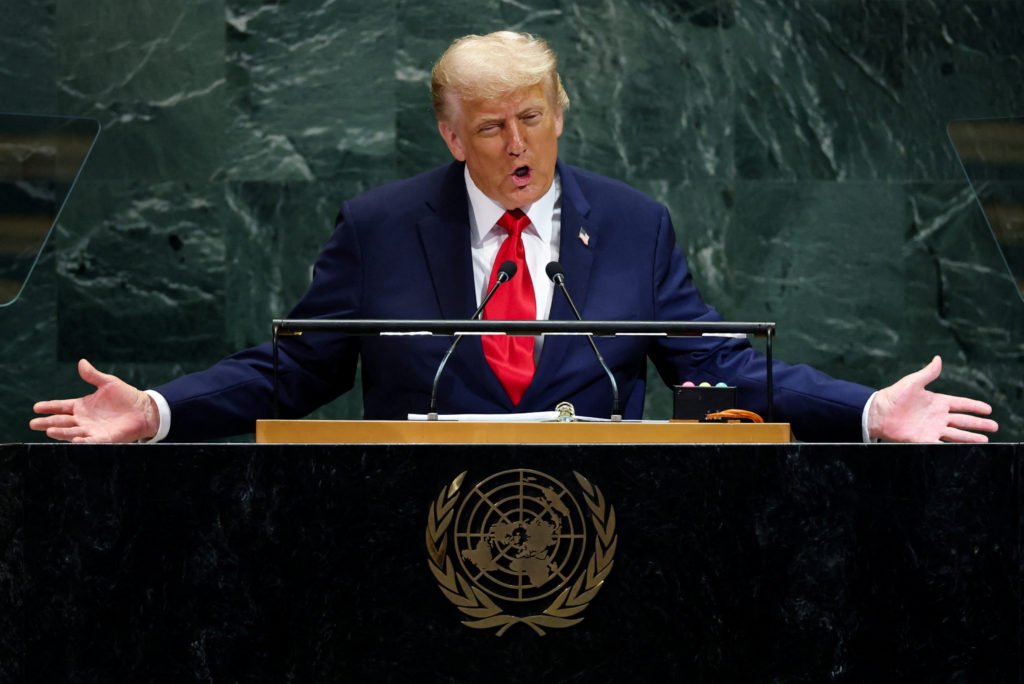
U.S. President Donald Trump addresses the 80th United Nations General Assembly at U.N. headquarters in New York City, U.S., September 23, 2025. REUTERS/MIKE SEGAR
Silk Road – In his article in the New York Times, Thomas L. Friedman offers a cautious and nuanced perspective on the initial Gaza ceasefire agreement brokered by the Trump administration. His central argument is that this deal, while welcome, is merely a first and relatively simple step in a much longer and more complex journey.
- The Ceasefire is a Pre-Natal, Not a Post-Graduate, Achievement: Friedman uses this analogy to emphasize that the current deal is a basic, foundational step. It’s like the beginning of a pregnancy, where the real work of “raising the child”—the difficult negotiations and compromises—lies ahead. Celebrating this as a major victory is premature.
- The “Harder Parts to Come”: Friedman outlines what these more difficult challenges are, which have been the core of the conflict for decades:
- Final Status Issues: This includes the most intractable problems that have derailed past peace talks: borders of a future Palestinian state, the status of Jerusalem, the right of return for Palestinian refugees, and Israel’s security guarantees.
- A Sustainable Political and Economic Solution: The ceasefire alone doesn’t address the underlying political and economic despair in Gaza. A long-term solution must involve a credible political horizon for Palestinians and tangible economic development to prevent a return to violence.
- The Nobel Prize Proposition: Friedman’s suggestion to give Trump a Nobel Prize is conditional and intentionally provocative. He is not endorsing the idea for the current deal. Instead, he is setting a high bar: if the Trump administration can successfully leverage this initial ceasefire to navigate the “harder parts” and deliver a comprehensive, final peace agreement, then such an honor would be warranted. It is a challenge, not an endorsement.
- A Warning Against Premature Celebration: The article serves as a warning to all parties—the U.S., Israel, the Palestinian Authority, and Arab nations—not to mistake this initial step for the finish line. The real test of statesmanship and diplomacy is yet to come.
In essence, Friedman argues that the Gaza ceasefire is a potential opening, a door to a much more difficult negotiation. The true measure of success will be whether this door leads to a lasting peace or simply slams shut once again on the same old problems.
Source: the New York Time
About the Author