In early January 2026, neighborhoods in northern Aleppo—particularly Sheikh Maqsoud, Ashrafieh, and Bani Zaid—witnessed a renewed outbreak of clashes between the Syrian Democratic Forces (SDF) and Syrian government forces.
The escalation followed a period of stagnation in the implementation of a previous agreement between the two sides to integrate the SDF into the Syrian armed forces. This deadlock heightened tensions and ultimately turned into armed confrontation on the ground, with SDF military positions being targeted and a broad curfew imposed across Kurdish neighborhoods.
Background of the Conflict and Causes of Escalation
The roots of the crisis go back to the March 2025 agreement between the Syrian government and the SDF, which stipulated the integration of SDF fighters into the Syrian armed forces and state institutions.
However, the agreement was never fully implemented due to disputes over force distribution, areas of deployment, and command structures, in addition to escalating mutual accusations of violations by both parties and the presence of armed groups not integrated into the agreement within Kurdish neighborhoods. These disagreements fueled severe tensions that led to the current military escalation.
Course of the Clashes and Exchange of Accusations
The clashes between Syrian forces and the SDF were accompanied by artillery shelling and airstrikes inside the neighborhoods of Sheikh Maqsoud and Ashrafieh.
Syrian forces considered SDF positions legitimate military targets, while the SDF accused government forces of carrying out indiscriminate shelling that resulted in civilian casualties and injuries, as well as the targeting of hospitals and schools.
SDF fighters refused to withdraw, affirming their determination to defend their positions despite government pressure, while government forces imposed partial movement restrictions in areas affected by the fighting.
Population Transfers
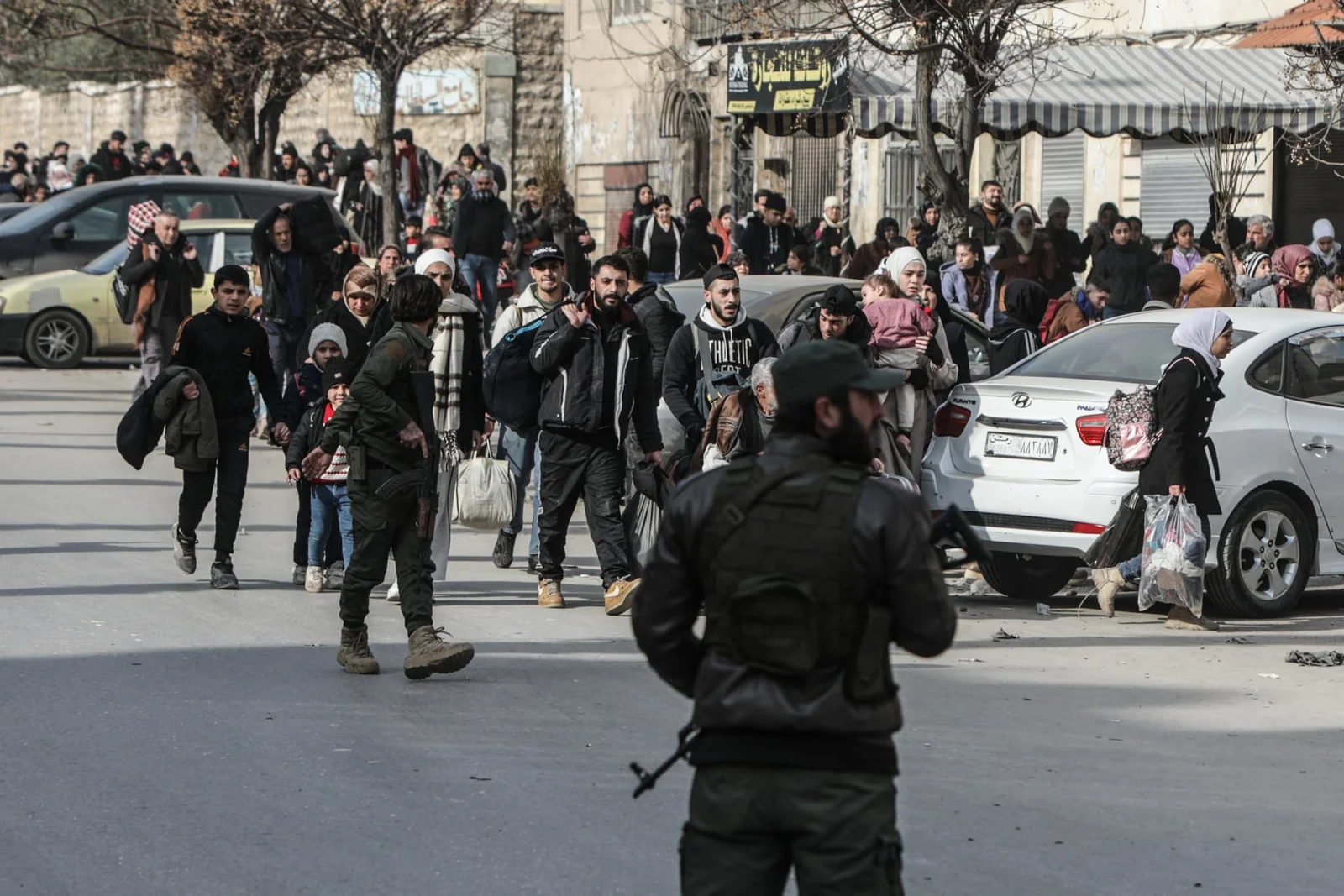
On January 9, 2026, Syrian forces began using buses to transport SDF fighters and some civilians forcibly from Kurdish neighborhoods to areas under the control of the Autonomous Administration in northeastern Syria. No departures of individuals were officially announced, and the issue of the buses has remained unaddressed so far.
At the same time, strict measures were imposed on neighborhood residents, with close monitoring during displacement, which sparked anger among local councils.
Many civilians were forced to leave their homes at gunpoint, while buses were dispatched to evacuate families to temporary gathering points away from conflict zones. These measures caused additional tension and deepened residents’ sense of isolation and forced displacement.
Violations Against Kurdish Minorities
According to field and civil reports, Kurdish neighborhoods in Aleppo witnessed direct violations against Kurdish minorities, including physical assaults, confiscation of residents’ property, and restrictions on movement within their areas. There are growing fears that these violations may continue and evolve into patterns similar to those witnessed in Syria’s coastal regions and in Suwayda.
Cases of arbitrary detention of civilians and fighters, as well as the forced displacement of families, have also been documented, representing an unprecedented escalation in existing tensions.
These violations have led to a deterioration of the humanitarian situation, heightened anxiety among local residents, and created an atmosphere of fear and insecurity within Kurdish neighborhoods.
Displacement and the Humanitarian Crisis
The clashes resulted in the displacement of tens of thousands of civilians from Sheikh Maqsoud, Ashrafieh, and Bani Zaid to safer areas within Aleppo and beyond.
Reports indicate that hundreds of thousands have been displaced in recent days, while others sought refuge in schools, mosques, and public centers after their homes were destroyed or rendered inaccessible due to shelling.
International and Regional Reactions
At the international level, the United Nations called for an immediate halt to the escalation and for the protection of civilians, stressing the need to return to political negotiations to prevent further expansion of the conflict.
The United States expressed support for de-escalation and the expansion of the ceasefire, while Turkey announced its readiness to support Syrian government forces, if requested, in confronting the SDF—an indication of the complexity of the regional landscape surrounding the Syrian file.
Outlook of the Crisis and Its Repercussions
Despite the announcement of a temporary ceasefire, the underlying sources of political and security tension remain unresolved.
The continued displacement and forced relocation of Kurdish minorities, along with the failure to implement the military and political integration agreement, increase the likelihood of renewed clashes in other parts of Syria.
Moreover, ongoing violations and the risk of forced deportation expose civilians to serious social and humanitarian dangers and render political solutions unattainable without effective international intervention and genuine enforcement guarantees.
About the Author