By Wu Chaolan – People’s Daily Online
Chinese New Year, or the Spring Festival, falls on Feb. 17 this year, and with the 9-day vacation running from Feb. 15 to Feb. 23, the country is immersed in its most vivid, symbolic, and emotionally charged celebrations of the year.
For travelers, it’s a rare 9-day-period when China bursts into celebration. Lantern-lit streets fill with families, festive music and laughter echo through old neighborhoods, food stalls steam in the cold air, and every corner glows with the warmth of the New Year.
People’s Daily Online has selected six cities where you can experience the Chinese New Year at its most vibrant, intimate, and authentic.
Beijing, capital of China

For first-time visitors to China, Beijing offers the most iconic Chinese New Year imagery — red lanterns swaying above ancient hutongs, the aroma of street snacks drifting through the cold air, and the city’s imperial architecture glowing under festive lights.
One of Beijing’s most signature Spring Festival experiences is its temple fairs: a lively mix of traditional street food, local crafts, seasonal rituals, and folk performances. Families gather at these fairs to celebrate the start of a new year.
This year, Beijing will host more than 30 temple fairs and lantern festivals, more numerous and elaborate than in previous years. Highlights include the Longtan, Ditan, and Changdian temple fairs, which will feature more on-site shows — from classic Beijing folk arts like crosstalk and traditional storytelling to acrobatics, opera, and martial arts performances from the Beijing-Tianjin-Hebei region.
For anyone hoping to feel the true warmth, joy, and bustle of a Chinese New Year, a temple fair is simply unmissable.

Shantou city, south China’s Guangdong Province

If you want to experience a Chinese New Year that feels truly alive, loud, and electrifying, Shantou in southern China’s Guangdong Province is a must-visit.
Here, the holiday spirit doesn’t come from fireworks alone. It comes from Yingge dance, a folk performance so powerful that locals say once the drums begin, the New Year has officially arrived.
From the first day of the Chinese New Year, Yingge troupes visit villages and households to deliver New Year blessings, marching down streets and performing from neighborhood to neighborhood in an unstoppable wave of energy. The performances often continue throughout the first lunar month, earning Yingge dance its online nickname: “ultimate New Year atmosphere generator.”
With wooden batons clacking in rhythm, dancers leaping and spinning like warriors, and the air filled with drumbeats and cheers, Yingge blends southern martial arts, opera, and dance into one breathtaking spectacle.
Originally inspired by the heroic brotherhood of “Water Margin,” the tradition was recognized as a national-level intangible cultural heritage in 2006. Today it has grown more inclusive, with more women joining the troupes and female Yingge performances drawing on legends such as Mu Guiying and Hua Mulan.
For travelers seeking the most intense and unforgettable New Year vibe, Shantou’s Yingge is unmissable.

Huangshan city, east China’s Anhui Province

Looking for something different this Chinese New Year? Head to Huangshan in east China’s Anhui Province, where a river of glowing fish lanterns lights up the ancient villages.
Every Spring Festival, ancient Huizhou villages such as Zhanqi, Wangmantian, Yuliang, and Chengkan come alive as fish lanterns — crafted in the shape of vivid koi — glide through stone alleys to the beat of drums, spreading New Year cheer from lane to lane.
One of the oldest and best-preserved folk traditions in the Huizhou region, the fish lantern carries blessings of fortune and harmony. Locals believe once the fish lanterns are lit, the New Year has truly begun, signaling reunion and renewal.
From the second day of the Spring Festival through the Lantern Festival on the 15th day, fish lantern troupes parade through the villages, performing classic moves like “koi wagging its tail” and “carp leaping over the dragon gate.” At its peak, the procession transforms the quiet villages into their liveliest celebration of the year — lanterns swaying, drums thundering, formations constantly shifting.
Whether you’re chasing authentic festive traditions or simply looking for a storybook New Year’s night, fish lanterns in Huizhou region offer one of the most magical Spring Festival experiences in China.

Quanzhou city, southeast China’s Fujian Province

Quanzhou is one of China’s most atmospheric places to spend the Chinese New Year. This Spring Festival, the city will roll out a festive cultural tourism program blending centuries-old traditions with a lively modern vibe to create a truly Minnan-style (southern Fujian) holiday celebration.
One highlight not to miss is the spectacular “cai jie” street parade, a vibrant folk tradition dating back to the Sui and Tang dynasties (581-907), when locals would gather during the New Year season to sing, dance, and celebrate together.
During the festival, parade troupes will sweep through Quanzhou’s most iconic streets and neighborhoods, including Zhongshan Road and Xunpu village, bringing the city into full celebration mode. With over 200 “cai jie” performances across 12 key areas, the streets will become a moving stage of drums, costumes, and joyful crowds.
This year, Quanzhou will also recreate a historical celebration, bringing to life the bustling scenes of the city’s Maritime Silk Road era when the city thrived as a hub of international trade and overseas exchange.
Beyond the parades, Quanzhou offers visitors a full menu of hands-on and immersive experiences. Visitors can join DIY intangible heritage workshops, learning traditional crafts such as wood carving, paper art, and lantern making, turning Minnan memories into something you can take home. Meanwhile, enthusiasts of traditional arts can dive into Quanzhou’s cultural depth through nonstop opera and music performances. More than 300 shows of Gaojia Opera, Liyuan Opera, and Nanyin will be staged throughout the season, offering a rare chance to hear, see, and feel Minnan’s thousand-year elegance come alive.

Zigong City, southwest China’s Sichuan Province

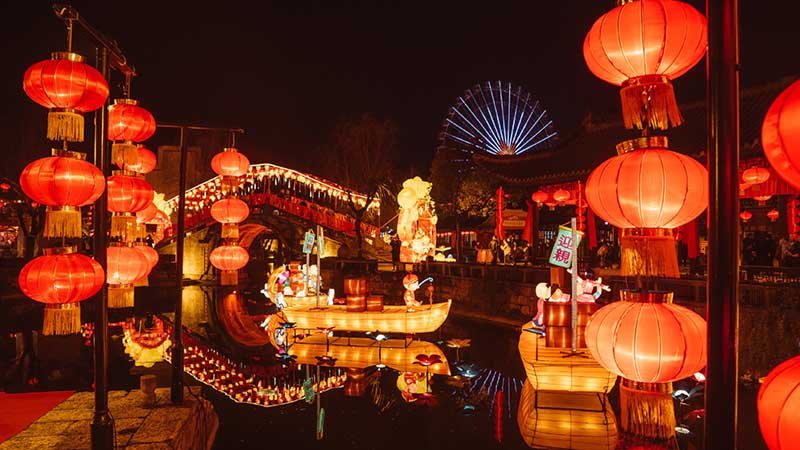
When the lanterns rise, the New Year spirit truly begins — and if you’re looking to witness China’s most dazzling lantern spectacle during Spring Festival, Zigong is simply unmissable.
Home to one of China’s most iconic national intangible cultural heritage traditions, the Zigong Lantern Festival, often praised as the “No. 1 Lantern Festival under Heaven,” carries centuries of folk artistry and collective festive memory. Here, traditional lantern-making techniques are transformed into glowing wonders, weaving together craftsmanship, mythology and history to light up the season.
This year’s festival blends lantern art with intangible heritage techniques such as tie-dye and paper-cutting. The displays bring to life epic Chinese myths, legendary tales, and classic historical stories. Centered around the Year of the Horse, the festival showcases folk symbols, rituals and storytelling elements in a grand visual narrative — an artistic scroll of light where tradition and imagination coexist in full bloom.
With 11 massive signature lantern installations and more than 200 medium and small lantern displays, Zigong builds not just a lantern show but a glowing world of its own, where visitors can walk through Chinese culture brought to life in light.

Harbin, northeast China’s Heilongjiang Province

If you’re looking for a Chinese New Year experience unlike anywhere else in the country, Harbin is the ultimate answer. While most cities celebrate Spring Festival with red lanterns and temple fairs, Harbin adds something magical: a true winter wonderland where the New Year glows in ice and snow. For travelers, coming to Harbin at Spring Festival is not just sightseeing — it’s stepping into China’s most spectacular seasonal celebration.
The highlight is undoubtedly Harbin Ice and Snow World, the city’s iconic winter festival and one of the most breathtaking cold-weather attractions in China. This year’s edition sets a new record in scale. The park spans 1.2 million square meters and uses over 400,000 cubic meters of ice and snow, making it the largest in the festival’s history.
Inside, towering ice castles, glowing palaces and crystal-clear sculptures rise under the night sky, turning the frozen landscape into a shimmering kingdom. As colorful lights illuminate the giant structures, visitors can walk through radiant ice corridors, admire monumental carvings, and witness how traditional craftsmanship meets extreme winter creativity.
Beyond sightseeing, the park is packed with winter fun — from ice slides and snow play zones to interactive attractions and outdoor games — making it a perfect family-friendly New Year getaway where kids and adults can celebrate together.
And what makes Harbin especially perfect for the Chinese New Year is the atmosphere beyond the park. The city’s winter landmarks — from the lively Central Street to its European-style architecture — feel even more festive during the holiday, with crowds gathering, families taking photos, and local markets filled with New Year’s energy.
For anyone seeking a holiday that is both deeply seasonal and visually unforgettable, Harbin delivers the most cinematic version of Spring Festival in China.

About the Author