The humanitarian and political situation in Gaza remains highly complex amid repeated Israeli violations of the ceasefire agreement that took effect on October 10, and continued international efforts to solidify the truce and implement its second phase.
Repeated Violations and Mutual Accusations
The Gaza Center for Human Rights documented 129 incidents of shelling and gunfire since the agreement began, resulting in 34 Palestinian deaths and 122 injuries. It condemned attacks on civilians—such as the Abu Shaaban family killing in Gaza City’s Zeitoun neighborhood—as clear disregard for human life and international humanitarian law, stressing that true civilian protection requires a permanent end to aggression and accountability for Israel.
Hamas reported that an Israeli tank fired directly at a vehicle carrying family members inspecting their home in Zeitoun, killing 11 people, including seven children and three women. The group described it as another massacre violating the ceasefire, calling on U.S. President Donald Trump and mediators to ensure Israel abides by the agreement.
The Israeli army received one hostage’s body from the Red Cross but accused Hamas of delaying the handover of others, claiming the group knows burial sites but is not cooperating. Hamas said the delay was due to technical constraints and the lack of heavy equipment needed to remove debris under the blockade.
Contradictory Statements
Senior Hamas official Mohammad Nazzal told Reuters the movement intends to retain security control in Gaza during a transitional phase and is ready for a five-year truce in exchange for reconstruction guarantees and progress toward Palestinian statehood.
He added that disarmament depends on the nature of the political project and who would receive the weapons, stating that Hamas cannot decide without knowing details.
These comments followed the execution of several murder convicts in Gaza, which Nazzal said occurred under exceptional circumstances after internal investigations, asserting that Hamas faces major pressures but remains committed to maintaining security.
The Israeli Prime Minister’s Office responded that Israel is committed to the ceasefire but expects Hamas to fully comply, including disarmament and the return of hostage remains.
International Monitoring
Israel’s Channel 13 reported that U.S. officers will establish a command center near Gaza to oversee an international task force searching for the bodies of Israeli hostages. About 200 U.S. troops have reportedly arrived for this mission, coordinating with a future stabilization force. Germany announced sending three officers to assist with ceasefire monitoring and demining efforts, while Turkey awaits Israeli approval to send 81 disaster-response medics to assist in body recovery operations for both Palestinians and Israelis.
Turkish Foreign Minister Hakan Fidan expressed concern that Israel might use delays in body recovery as a pretext to violate the ceasefire, urging restraint and international vigilance.
Fears of Ceasefire Collapse
Diplomatic activity is intensifying ahead of U.S. envoy Witkoff’s Middle East visit, expected to include Egypt, Israel, and possibly Gaza, to monitor the deal’s implementation.
According to Axios, the plan’s second phase faces major obstacles—chiefly Hamas disarmament and forming a civilian administration for Gaza. A U.S. official warned that Washington seeks to prevent collapse of the truce amid growing mistrust.
Meanwhile, Israeli forces continued raids in the West Bank, including the arrest of at least ten Palestinians in Deir Jarir near Ramallah, drawing criticism for ignoring the ceasefire’s spirit.
Ongoing Siege and Attacks
Israeli forces stationed near the border opened fire toward eastern Khan Younis and Gaza City, while naval boats targeted fishermen near Gaza’s port.
Civil defense teams reported 11 civilians killed when artillery struck a vehicle carrying displaced families on Salah al-Din Road in Zeitoun, with nine more bodies recovered from nearby rubble. Search operations continue, hindered by shortages of fuel and equipment.
Widespread Destruction
UN data show that since Israel’s war on Gaza began on October 7, 2023, over 238,000 Palestinians have been killed or wounded—most of them women and children—with more than 11,000 missing and hundreds of thousands displaced.
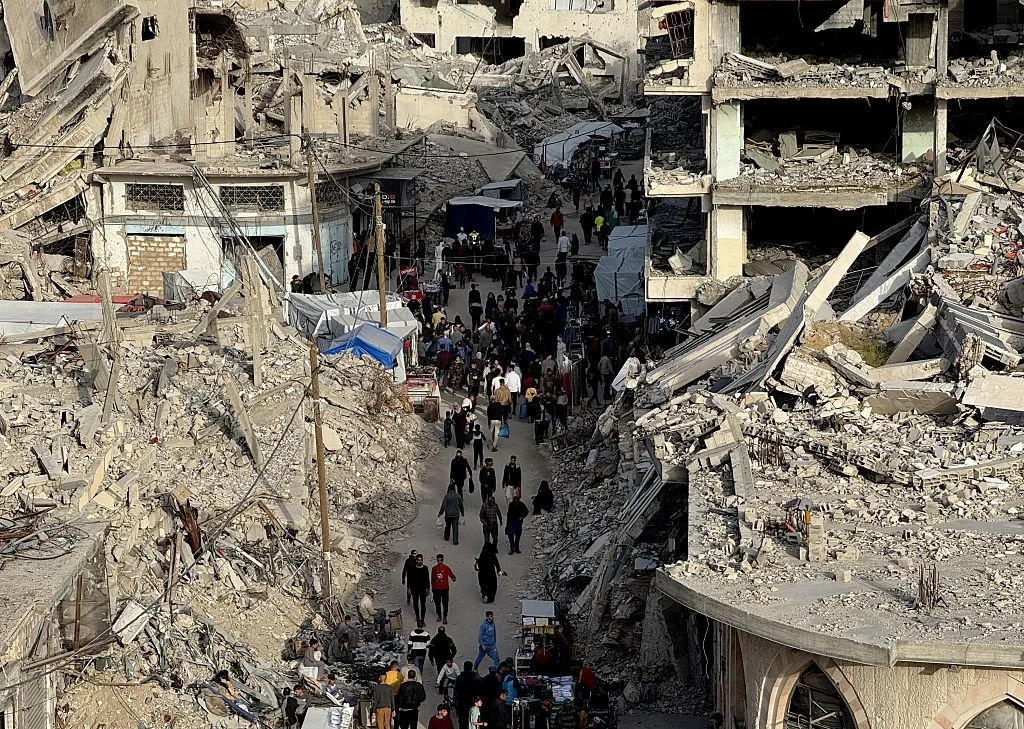
The war caused famine, near-total destruction of homes, infrastructure, hospitals, and schools, leaving Gaza in systemic collapse.
The UN Mine Action Service warned of rising risks from unexploded ordnance, saying clearance operations will take a long time but are essential for recovery. Mission head Luke Erving stated that restrictions in recent years prevented large-scale surveys and that thousands of unexploded objects still threaten civilians, especially children.
Urgent Humanitarian Needs
UNICEF’s chief emergency coordinator Hamish Young described Gaza’s condition as catastrophic, emphasizing that the quality of aid matters as much as quantity. He urged unrestricted entry of essentials, including tents, tarpaulins, clean water, fuel, and repair materials for wells and desalination plants, since most water infrastructure has been destroyed.
Gaza’s municipality warned of an impending environmental disaster due to sewage leakage contaminating groundwater. Pump stations have been destroyed or disabled, causing wastewater flooding and raising fears of seawater pollution and contamination of drinking supplies. The municipality called for urgent entry of maintenance equipment and power generators to restore water and sanitation systems.
source: Asian Affairs
About the Author