Following an intensive round of talks in Paris under U.S. sponsorship, Syria, Israel, and the United States announced an agreement to establish a joint mechanism for intelligence sharing and military de-escalation.
The agreement—described by local and international observers as a “first step toward rearranging security and diplomatic relations among the parties”—has sparked widespread debate over its feasibility and true objectives, amid diverging interests among the three states and a long history of tensions and conflicts.
According to a joint statement issued by the U.S. Department of State, the mechanism aims to “facilitate immediate and continuous coordination on intelligence sharing, military de-escalation, enhanced diplomatic engagement, and the exploration of commercial opportunities,” under U.S. supervision.
This initiative comes amid clear U.S. pressure on both Tel Aviv and Damascus to control borders and ensure security stability, which some experts see as paving the way for a potential normalization process between Israel and Syria in the future.
The Syrian side stated that any progress in the talks remains conditional on halting Israeli military incursions, setting a binding timetable for full withdrawal from occupied Syrian territory, and returning to the 1974 Disengagement Agreement. A senior Syrian official said Israel relies on “technical procrastination” and must abandon its “expansionist mentality” before any comprehensive agreement can be reached.
In contrast, Israel issued no official confirmation regarding the suspension of its military activities, limiting its comments to noting that the Paris talks focused on security issues and economic cooperation.
The talks—described by Syrian state media as a resumption of efforts to revive the Disengagement Agreement—included a Syrian delegation comprising the foreign minister and the head of the General Intelligence Directorate. The Israeli delegation represented the prime minister, the ambassador to Washington, and several military officials. The U.S. team included the U.S. president’s Middle East envoy and former president’s son-in-law Jared Kushner, as part of Washington’s efforts to closely oversee the process.
Political analysts note that the trilateral announcement carries multiple implications. Some argue that what is being marketed as an understanding between Syria and Israel is not a genuine agreement, but rather “a U.S. formula to create the illusion of consensus before the international community.” According to this view, Israel seeks to exploit the momentum to advance its interests through “creative chaos” in southern Syria, while the Syrian government aims to buy time to reorganize its internal affairs in cooperation with Turkey and ensure a balance in national security.
Others, including conflict-resolution specialists and experts on Israeli affairs, argue that the fifth round of negotiations represents a continuation of the U.S. vision, and that establishing a “joint contact cell” grants Israel intelligence reach inside Syria, while Damascus remains cautious and gradual in its intelligence engagement.
According to experts, this step may later pave the way for a broader agreement involving partial or full withdrawal from occupied territories and the establishment of a demilitarized zone, accompanied by wider economic and diplomatic cover—reflecting clear divergences in the priorities of the three parties.
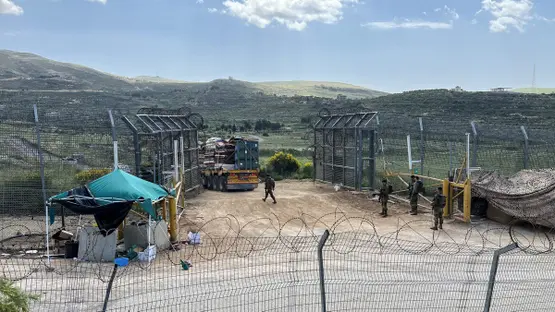
On the Israeli side, Yedioth Ahronoth addressed the negotiations, noting that Israel maintains its military presence in sensitive areas such as Mount Hermon and the tri-border area south of the Golan Heights. This presence aims to control surveillance and intelligence operations, prevent surprise attacks from Syrian territory on settlements, and stop weapons transfers to Hezbollah.
The newspaper adds that Israel sees no immediate interest in reaching a comprehensive agreement, viewing current understandings instead as a means to satisfy the United States and secure its security privileges.
The U.S. vision, meanwhile, focuses on supporting border stability and giving the Syrian president an opportunity to reorganize state institutions and achieve a degree of stability, with direct oversight of any military and diplomatic arrangements.
Experts indicate that Washington is betting that cooperation under its supervision will reduce the likelihood of escalation, while questions remain about Israel’s actual commitment to what has been agreed upon—especially given its overwhelming military superiority compared to Syria.
The divergence in positions underscores the complexity of the situation: Damascus seeks to restore full sovereignty over its territory, while Tel Aviv aims to secure its borders, prevent any immediate threats, and maintain air and intelligence superiority.
The United States, for its part, adopts the role of mediator and apparent guarantor of peace, placing its regional interests among its priorities, including those of its allies in the Gulf and Turkey. Thus, the “joint mechanism” in Paris emerges as both a symbolic and strategic step, yet one whose outcomes remain uncertain, amid high probabilities of continued instability and parallel military maneuvers in southern Syria.
The ambiguity surrounding the agreement and the true intentions of the parties raises fundamental questions: Is the mechanism merely a communication channel to reduce military friction, or the beginning of a phase of comprehensive normalization between Damascus and Tel Aviv under U.S. supervision? Will Syria be able to impose its conditions regarding military withdrawal, or will control remain in Israeli hands as it seeks to preserve its strategic positions? And will U.S. pressure lead to a real agreement on the ground or merely formal understandings?
In this context, observers believe the U.S. role will be decisive in the coming phase—whether through monitoring implementation or pushing the parties toward deeper diplomatic and economic engagement. Nevertheless, the conflict over southern Syria, its intelligence dimensions, and the overlapping interests of armed groups and regional factions remain a central factor in shaping the future of any understanding, making any current assessment largely speculative and dependent on power balances and tactical maneuvers.
Ultimately, observers agree that the announcement of the “joint mechanism” marks an important moment in U.S. diplomacy in the Middle East, but one fraught with risks—especially if divergences in interests and conflicting security and political priorities persist. In the absence of clear Israeli commitments to military withdrawal, tensions on the ground in southern Syria are likely to continue and may escalate at any moment, leaving the political and intelligence future of the region suspended between diplomatic ambition and military reality.
About the Author