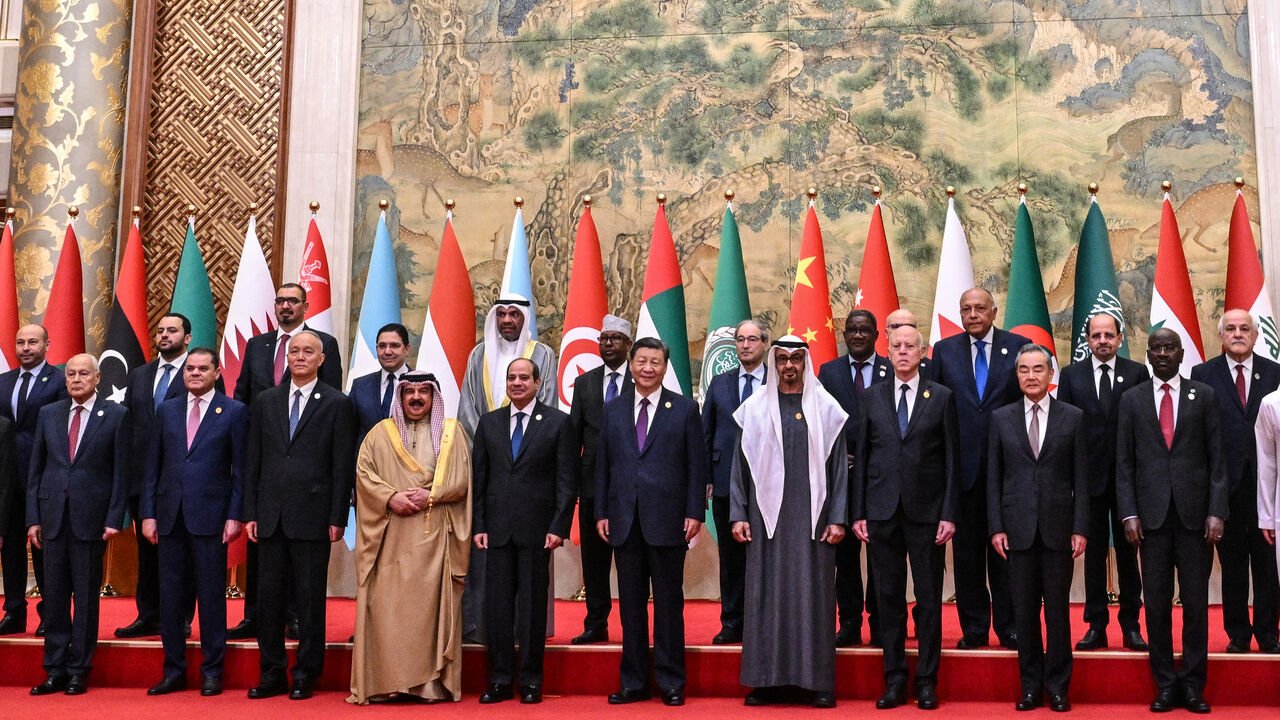
China Arab states summit in Beijing in 2022
Silk Road – By Dr. Haytham Mouzahem*
Arab-Chinese relations have witnessed significant development over the past two decades, particularly as a result of the efforts of the China-Arab States Cooperation Forum, both at the ministerial level and across its various branches. China and a large number of Arab countries have continued to work to accelerate the implementation of the outcomes of the first China-Arab States Summit, held on December 9, 2022, to advance China-Arab relations toward a better future and broader horizons, with the goal of establishing an Arab-Chinese community with a shared destiny.
On the occasion of the 20th anniversary of the founding of the China-Arab States Cooperation Forum, the 10th Ministerial Meeting of the Forum was held in Beijing at the end of May 2024, with the participation of leaders of four Arab countries: Egypt, the UAE, Bahrain, and Tunisia, as well as foreign ministers and officials from other Arab countries, along with Chinese officials, led by President Xi Jinping, to discuss ways to strengthen Arab-Chinese relations. The forum adopted the Beijing Declaration, the Implementation Plan for the Forum’s Recommendations 2024-2026, and a joint statement between China and Arab states on the Palestinian issue.
The Beijing Declaration outlined “a practical path forward for promoting the building of a community with a shared future between China and Arab states.” It also reaffirmed that “China and Arab states will continue to support each other on core interests, deepen practical cooperation, and clarify their common positions on the political resolution of regional hotspot issues, dialogue among civilizations, global governance, counterterrorism, human rights, artificial intelligence, climate change, and other issues.”
China and Arab states continue to strengthen strategic cooperation. Arab states support China’s efforts to safeguard its core interests and consistently adhere to the One China Principle. China, in turn, supports Arab states’ efforts to enhance strategic independence, safeguard their sovereignty, and resolve disputes through dialogue and consultation.
China has signed cooperation documents with all Arab states and the League of Arab States to promote the Belt and Road Initiative. The two sides have implemented more than 200 major projects under this initiative, benefiting approximately two billion people on both sides.
Chinese-Arab cooperation is witnessing significant progress in the fields of energy, finance, infrastructure, and others. China imported 265 million tons of crude oil from Arab countries in 2023, equivalent to 47 percent of its total foreign crude oil imports.
Chinese-Arab cooperation is also advancing in the fields of photovoltaic energy, wind energy, civil nuclear energy, and hydrogen energy.
The Chinese currency is also entering Arab countries rapidly; China has signed local currency swap agreements with Egypt, the UAE, and Saudi Arabia.
In the field of infrastructure, China has built the building known to Egyptians as the “New Pyramid” in the New Administrative Capital of Egypt, the tallest in Africa; the road linking eastern and western Algeria, which is more than 1,200 kilometers long; and Lusail Stadium in Qatar, which was the main stadium for the 2022 FIFA World Cup qualifiers; The Mohammed VI Bridge in Morocco is the largest suspension bridge in Africa.
Chinese-Arab cooperation has also achieved fruitful results in the fields of information and communications, aviation, space, big data, artificial intelligence, the BeiDou Navigation Satellite System, and international research to combat drought and desertification. This knowledge-based cooperation has contributed to building an advanced network for technology transfer and cooperation, linking Chinese scientific research institutions and innovative companies with their Arab counterparts.
Trade Exchange
China has become the largest trading partner of Arab countries for several consecutive years. The volume of trade between China and Arab countries increased from $36.7 billion in 2004 to $398.1 billion in 2023, a tenfold increase. For a long time, China’s crude oil imports from Arab countries have accounted for half of its total global imports, reaching 260 million tons in 2023. The two sides have also fully implemented cooperation in the oil and gas sector, including the Yanbu refinery in Saudi Arabia, the integrated refining and petrochemical complex project in Panjin, Liaoning Province, China, the Fujian joint integrated refining and ethylene production project, the onshore oil field project in Abu Dhabi, and many other projects. The two sides have also implemented a large number of new energy cooperation projects, such as the Red Sea New Energy Storage City project in Saudi Arabia, the Hassyan power plant in Dubai, and the Benban solar park in Egypt. There are also joint cooperation projects in the TEDA zone in Suez, Egypt, the Jazan region in Saudi Arabia, the Model Park for Production Capacity in the UAE, and the China-Oman Industrial City in Duqm. Communications
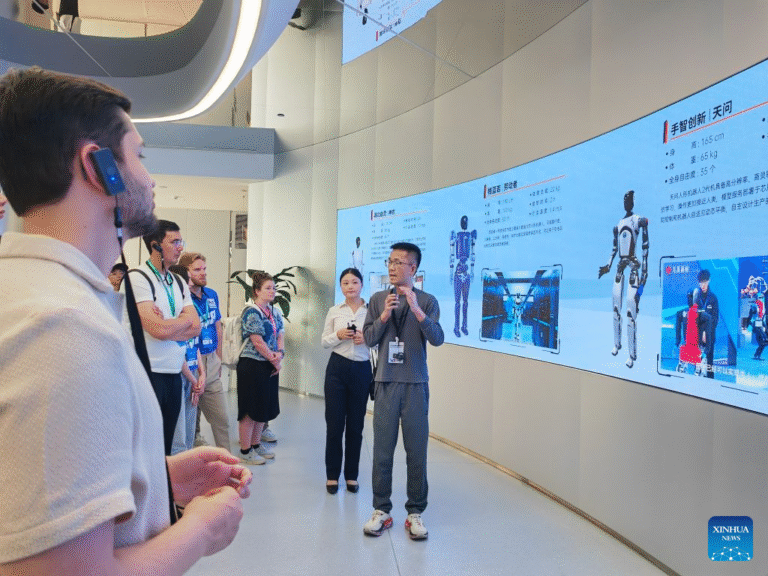
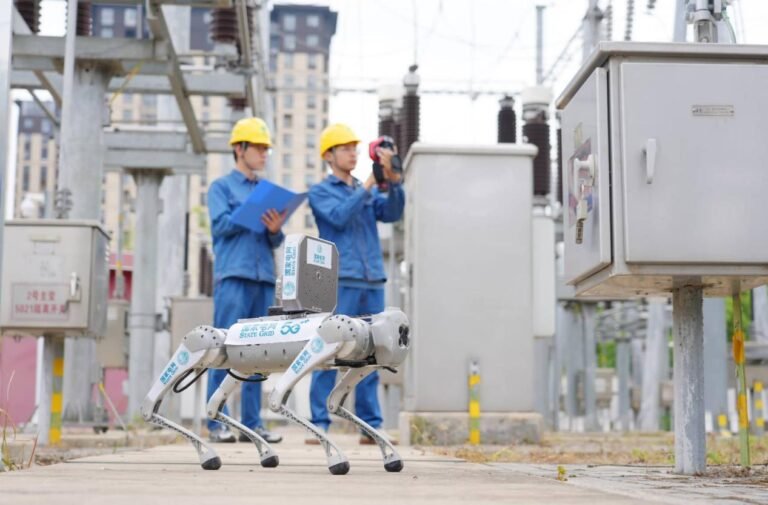
Cooperation between the two sides is steadily increasing in emerging fields such as 5G communications technology, space and satellites, big data, artificial intelligence, and new energy. Sino-Arab centers have been established for technology transfer, clean energy, the BeiDou Satellite System, and international studies on drought, desertification, and arable land degradation.
The China-Arab BeiDou Center of Excellence, established in Tunisia, is the first center outside China for the BeiDou Navigation Satellite System. The Algerian Alcomsat-1 satellite is the first communications satellite launched by China for the benefit of Middle Eastern and Arab countries. The 5G Smart Port of Sohar in the Sultanate of Oman is the first smart port in the Middle East. Nearly 1,000 5G base stations have been built in Kuwait, making it the first country in the Middle East to have a 5G network covering its entire territory. Several Fengyun meteorological satellites provide 24/7 remote sensing weather monitoring services to Arab countries.
Financial Cooperation
China and Arab countries have made significant progress in financial cooperation and trade and investment facilitation. The China-Arab Banking Association, established at the initiative of the China Development Bank, is the first multilateral mechanism for cooperation between Chinese and Arab financial institutions. By the end of 2023, the China Development Bank had supported 99 projects in Arab countries by issuing loans worth $17.189 billion. The People’s Bank of China signed bilateral currency swap agreements with the Central Bank of Saudi Arabia, the Central Bank of Egypt, and the Central Bank of the United Arab Emirates. Egypt successfully issued Panda bonds worth 3.5 billion Chinese yuan. The Industrial and Commercial Bank of China and the Central Bank of Qatar established a clearing and settlement center for Chinese yuan transactions, with the total settlement amount to date exceeding 400 billion yuan.
Cultural Communication Mechanisms
Of the 19 cooperation mechanisms within the forum, 11 relate to people-to-people and cultural communication. Sixteen training courses were held, attended by 500 Arab government officials, academics, and media professionals. 65 Arab students were accepted into the project to prepare translators from and into Chinese. Arab countries are witnessing a surge in interest in learning the Chinese language. Last year, 2023, Chinese was officially included in the national curricula in six Arab countries: the UAE, Saudi Arabia, Palestine, Egypt, Tunisia, and Djibouti. China established 21 Confucius Institute branches in cooperation with 13 Arab countries and established twinning relationships with 47 cities in 13 Arab countries.
Chinese Foreign Minister Wang Yi stated, “China’s westward orientation coincides with the Arabs’ eastward orientation. Beijing is determined to work with Arab countries to promote the Belt and Road Initiative and consolidate bilateral cooperation in the energy sector. China also welcomes Arab countries to increase investment in China’s development and supports the Arab side in implementing model projects.”
In short, this remarkable success in building a Sino-Arab community of shared future demonstrates that it aligns with the desires and aspirations of the Chinese and Arab peoples, serves the common interests of both sides, and has promising prospects and a bright future.
*Dr. Haytham Mouzahem is a Lebanese professor and researcher, and a resident fellow at the Sino Group Belt and Road Research Institute at Hong Kong Chu Hai College.
About the Author