The confrontation between Iran and the United States and “Israel” has entered an unprecedented phase, as Tehran announced the martyrdom of the Leader of the Revolution and the Islamic Republic, Sayyed Ali Khamenei, along with several senior military commanders. This comes alongside the expansion of missile and aerial operations under “True Promise 4,” in direct response to the U.S.-Israeli aggression that targeted Iranian territory on Saturday morning.
Announcement of the Martyrdom and Details of the Attack
At dawn on Sunday, Iranian state television announced the martyrdom of the Leader of the Revolution and the Islamic Republic of Iran, Sayyed Ali Khamenei, at his office in the “Leadership House,” following what was described as a treacherous attack carried out in the early hours of Saturday as part of U.S.-Israeli aggression that struck several Iranian provinces.
According to the Iranian Fars News Agency, his daughter, son-in-law, and grandson were also killed in the same attack.
Later, Iranian television announced the martyrdom of Major General Abdolrahim Mousavi, Chief of the General Staff of the Armed Forces; Brigadier General Aziz Nasirzadeh, Minister of Defense; Admiral Ali Shamkhani, Secretary of the Defense Council; and Major General Mohammad Pakpour, Commander-in-Chief of the Islamic Revolutionary Guard Corps, as a result of the attack.
Mousavi had been appointed on June 13 as Chief of Staff, succeeding Major General Mohammad Bagheri in the country’s highest-ranking military position. Mohammad Pakpour had assumed command of the Revolutionary Guard after Hossein Salami. Ali Shamkhani had taken over as Secretary of the National Defense Council on February 5, 2026, by presidential decree.
Formation of a Leadership Council and Constitutional Procedures
Following the announcement, Ali Larijani, Secretary of the Supreme National Security Council, confirmed that, in accordance with the constitution, a Leadership Council has been formed to assume the Leader’s responsibilities until a successor is chosen, stressing that constitutional procedures are proceeding normally.
Larijani stated that “the enemy is deluded if it believes assassinating leaders can destabilize Iran,” describing the targeting of the Leader as “a grave mistake that will not pass without consequences.” He added that the Iranian missiles launched yesterday were “painful,” and that what is to come will be “even more painful.”
The Supreme National Security Council declared that Khamenei’s martyrdom would be “the starting point of a great uprising against the tyrants of the world.” The Iranian presidency stated that his death “will not go unanswered,” and that Iran will pass through this phase united and steadfast.
Positions of Iranian Authorities
Parliament Speaker Mohammad Bagher Ghalibaf stated that Iran “has prepared for this moment” and that the Leadership Council will continue the path after the Leader’s martyrdom, warning the United States and Israel that they will pay the price for “crossing the red line.”
Judiciary Chief Gholam-Hossein Mohseni Eje’i stressed that Americans and Israelis “will not extract concessions from the Iranian people over the blood of their leader,” asserting that the country has entered a phase of open confrontation.
Foreign Minister Abbas Araghchi said that “the school of the martyred leader will remain alive and inspiring,” affirming that his path is “a path of faith, resistance, and hope.”
The Iranian Response: “True Promise 4”
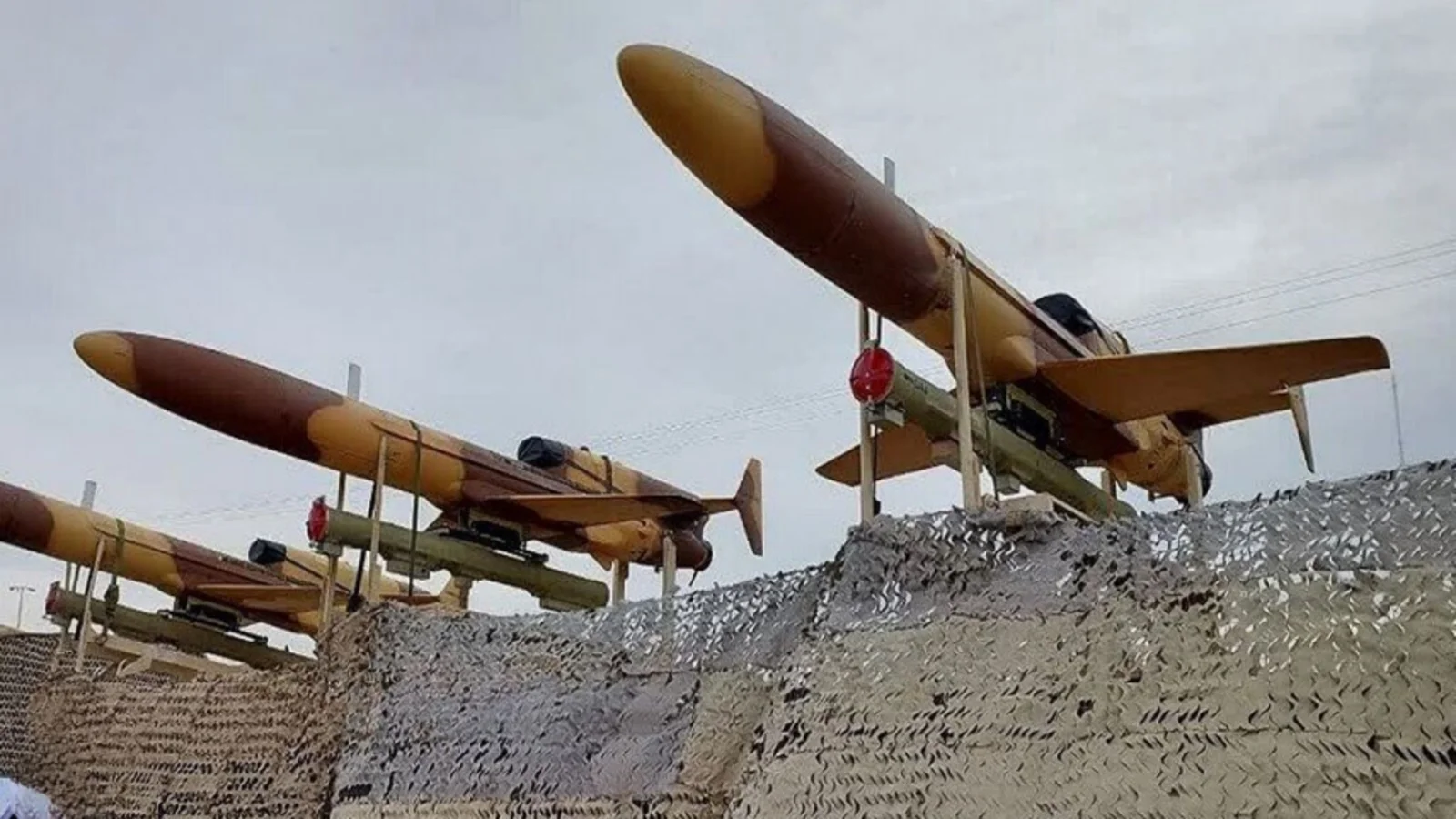
Militarily, the Islamic Revolutionary Guard Corps announced in successive statements the implementation of multiple waves of “True Promise 4,” involving large-scale missile and drone attacks against American and Israeli targets.
In statement No. 6, the Guard confirmed carrying out the sixth wave forcefully, targeting 27 points of U.S. bases in the region, in addition to Tel Nof Airbase, the Israeli military’s General Command headquarters in HaKirya, and a defense industrial complex in Tel Aviv.
In another statement, the Guard said the third and fourth waves are being executed continuously using more advanced missiles than those used in “True Promise 3,” described as “more precise and more lethal.”
Targets included the Israeli navy base and warship dock at the port of Haifa, Ramat David Airbase, the Israeli Ministry of Defense in HaKirya, the military-industrial settlement of Beit Shemesh, and the military industries center in Ashdod.
The Guard also announced strikes on Prince Sultan Air Base in Saudi Arabia, Al-Harir Air Base in Iraq, and the U.S. naval base in the Abdullah Al-Mubarak area of Kuwait, as well as targeting vessels supporting U.S. operations in the Indian Ocean, including the ship “MSP” and an “MST”-class combat vessel.
The Guard stated that operations will expand and intensify, and that upcoming waves will be “more damaging and harsher.”
In its statement No. 3, the Iranian army announced large-scale attacks using various types of drones against Israeli positions and interests, in addition to a new wave of strikes on U.S. bases in the region. It confirmed that offensive and defensive operations are ongoing, with additional statements expected in the coming hours.
Civilian Casualties
On the civilian level, the Public Prosecutor’s Office in Hormozgan Province, southern Iran, announced that the number of victims from the targeting of the Minab Girls’ Primary School has risen to 148 killed and 95 injured. In Fars Province, a local official reported that 20 female volleyball players were killed following the targeting of a sports hall in the city of Lamerd.
The Iranian Red Crescent reported 201 killed and 747 injured as a result of the aggression so far, with the toll expected to rise.
Developments Inside Israel and the Region
On the other side, Israel reported detecting new waves of missiles launched from Iran, including one that struck Beit Shemesh near Jerusalem. Air raid sirens sounded in central areas, Haifa, the Krayot, the north, and Jerusalem.
Israeli media reported damage to approximately 200 buildings in Tel Aviv due to Iranian missiles, with significant destruction in subsequent waves, including the destruction of a building and a direct hit on a target in the city. The number of injured reportedly rose to 21, including critical cases, in addition to the death of one settler.
Regionally, Agence France-Presse reported explosions in Dubai with rising plumes of smoke, alongside explosions heard in Doha and a fire breaking out in an industrial area.
Diplomatic Moves
At the United Nations, Iran’s envoy to the Security Council, Amir Saeid Iravani, stated that the actions taken by the United States and Israel constitute a flagrant violation of the UN Charter and do not meet any criteria for self-defense.
He said statements by Donald Trump and Benjamin Netanyahu regarding regime change confirm the nature of the attack, arguing that the war is not only against Iran but against international law.
In the same context, Democratic Senator Jon Ossoff was quoted as saying that Trump “lied to the country eight months ago when he claimed that U.S. strikes had eliminated Iran’s nuclear program.”
Between Escalation and Open Response
Statements from the Revolutionary Guard affirmed that “the sound of sirens will not stop in the occupied territories and at American bases,” and that operations will continue with “successive blows.” The Guard also announced readiness to launch “the fiercest offensive operation in the history of the armed forces” at any moment.
The regional scene thus appears open to broad possibilities, as Iran loses the head of its leadership pyramid and several top military commanders while shifting to a direct, multi-front military response that extends beyond traditional confrontation to target bases and facilities across multiple arenas.
According to official Iranian positions, the current phase is not merely a tactical response, but an open battle intended to reshape deterrence equations in the region, at a time when indicators point to an expanding confrontation and the intertwining of its military, political, and diplomatic tracks.
About the Author