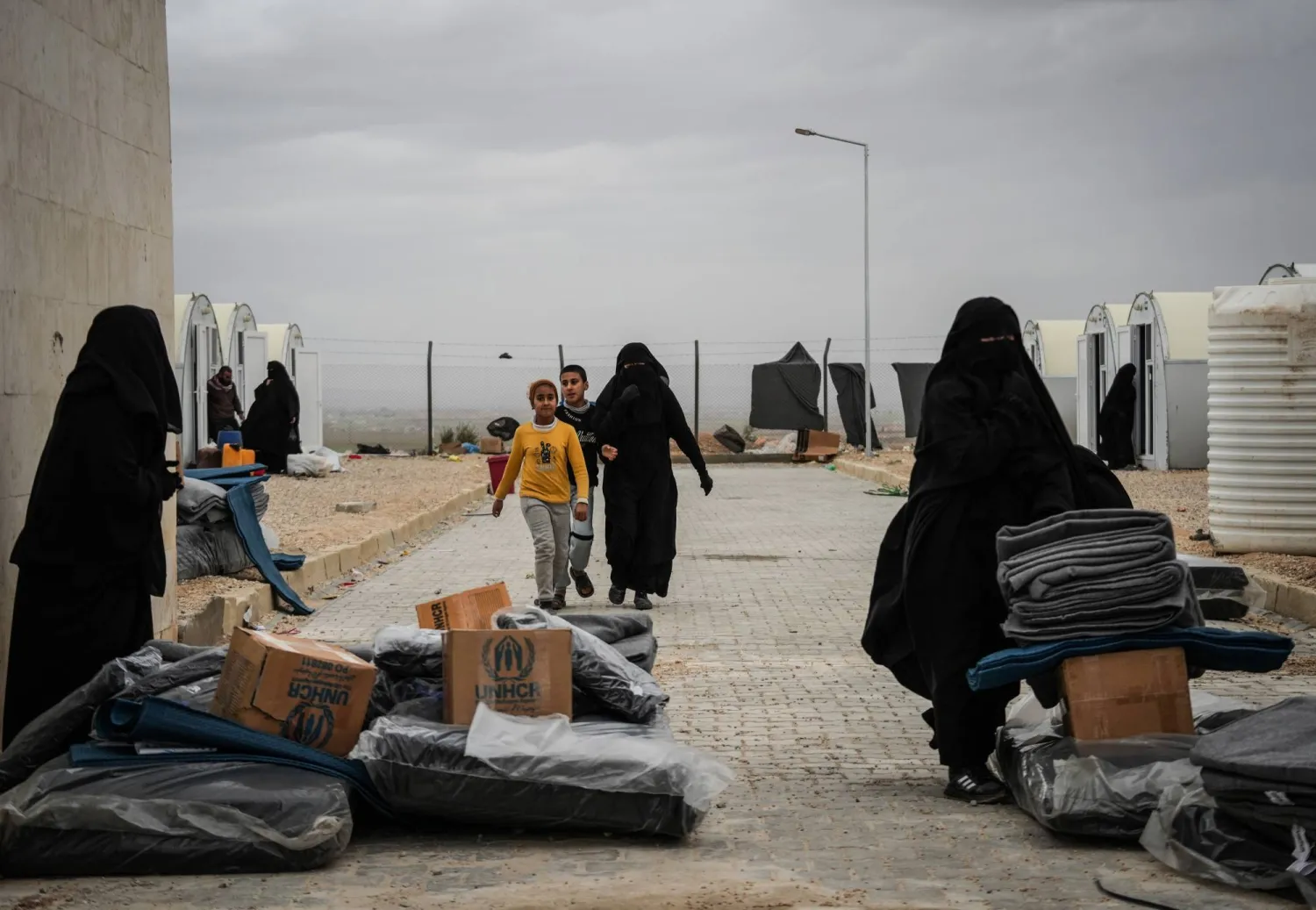
Al-Hol Camp in northeastern Syria was established in 2016 initially as an emergency shelter for people displaced by the war, but it quickly became the largest gathering of families of foreign fighters linked to the Islamic State (ISIS).
The camp hosted women and children who had lost their fathers or lived with fighters, creating a complex environment combining humanitarian, security, and political dimensions. Over the years, living conditions became extremely harsh, with overcrowded tents, shortages of water and electricity, and declining medical and food support, making it one of the most vulnerable displacement sites in the world.
Complete Evacuation and Final Closure
On February 22, 2026, Syrian authorities announced the closure of the camp after relocating its last residents, marking the end of a decade-long phase.
The evacuation included thousands of women and children, as well as some men who had not been previously relocated, transferring them to temporary detention centers or resettling them within Syria or abroad.
The decision followed the Syrian government’s temporary control over the camp after the withdrawal of the Syrian Democratic Forces (SDF), which had managed it for years. Damascus’ control allowed authorities to implement evacuation plans in an organized manner, including thorough inspections to ensure no residents remained.
This move drew mixed international reactions: some welcomed it as a reduction of security risks, while others stressed the need to guarantee the rights of children and women previously trapped in the camp.
Destinations of Residents After Evacuation
Transfer to Other Camps within Syria
Most Syrian and non-Syrian families were moved to alternative camps inside Syria, notably in the town of Akhtarin in Aleppo Governorate. These camps provide a minimum level of humanitarian services but still lack essential facilities, such as continuous education for children or psychological support programs for women who experienced trauma from family loss or violence.
Transfers were conducted under careful arrangements to avoid chaos and ensure registration of all residents for security management.
Deportation and Resettlement
For Iraqi nationals, the United Nations High Commissioner for Refugees (UNHCR) played a central role in organizing returns to Iraq.
Recently, 191 individuals were relocated from the camp to rehabilitation centers in Iraq, providing temporary housing, psychological support, and social integration for children, preparing them for reintegration into their original communities.
Some European countries have also begun assessing the return of their citizens, focusing on children who lost one or both parents over the previous years.
Unorganized Departures
Reports indicated that a number of residents left the camp individually before official evacuation operations, reflecting fear and concern about penalties or legal prosecution.
These individual departures raised additional security concerns about the possible movement of individuals linked to extremist groups to other areas, within Syria or across borders.
Humanitarian Dimensions: Complex Needs
With the camp’s closure, the crisis of children and women who spent many years in a confined environment, often without proper education or continuous healthcare, comes to the fore.
These children require specialized programs for education and psychological rehabilitation, particularly those exposed to violence or who lost family members.
Women, especially widows and single mothers, face challenges in social and economic reintegration and need long-term psychosocial support programs.
The reintegration of foreign families faces complex legal and political obstacles, requiring cooperation among states and international organizations.
Security and Political Dimensions
Security Threats Before and After Evacuation
Al-Hol Camp was considered a long-term security threat, hosting individuals linked to former ISIS fighters, with the potential for repeating extremist behavior.
Before evacuation, the camp witnessed smuggling networks, recruitment efforts, and mass escape attempts. After evacuation, concerns persist over some individuals relocating to other Syrian areas or returning to their home countries with extremist ideologies, necessitating close monitoring by security agencies.
Ambiguity and Fires Post-Closure
Despite the full closure announcement, reports of fires in parts of the camp after evacuation created uncertainty and questions about ongoing activities.
Images circulated showing fires in tents and facilities after the camp was nearly empty, raising questions about whether the fires were part of dismantling the camp, destroying documents and belongings, or conducting undeclared “security cleaning.” No official clarification has been provided, increasing ambiguity regarding the fate of thousands who left, particularly foreigners.
Concerns of “Redistributed Risk”
Observers note that dismantling the camp did not occur suddenly or violently as security reports had warned for years; instead, it was gradual and quiet. This indicates the transfer of risk from a contained area to a wider spread within a society already suffering from economic and security fragility.
The main issue, according to reports, is the lack of comprehensive programs for psychological, ideological, and social rehabilitation for thousands of women and children who spent years in a strict ideological environment, along with the absence of clear judicial mechanisms to assess individual threat levels. This leaves the potential for forming extremist cells that are difficult to monitor.
Additionally, relocating families to multiple camps or areas, some lacking strict supervision, raises concerns about reproducing extremist ideologies in communities already affected by poverty and security tensions. Thus, the camp’s final closure does not mark the end of challenges but the beginning of a new phase requiring careful follow-up and ongoing rehabilitation programs.
Political Implications
The camp’s closure reflects the Syrian state’s return to asserting control over previously uncontrolled areas and symbolizes internal and regional political shifts. This step allows authorities to enforce order and security but also raises complex human rights issues regarding the treatment of children and foreign families.
End of a Phase, Start of New Challenges
Closing al-Hol Camp marks the end of a more than decade-long phase and concludes an exceptional humanitarian and security crisis in northern Syria.
However, it opens the door to new challenges: rehabilitating returnees, integrating children and women into society, securing stability in post-conflict areas, and preventing any resurgence of extremism in the region.
The responsibility for ensuring a safe and organized transition for affected groups and rebuilding stable lives lies jointly with the international community and Syrian authorities.
About the Author