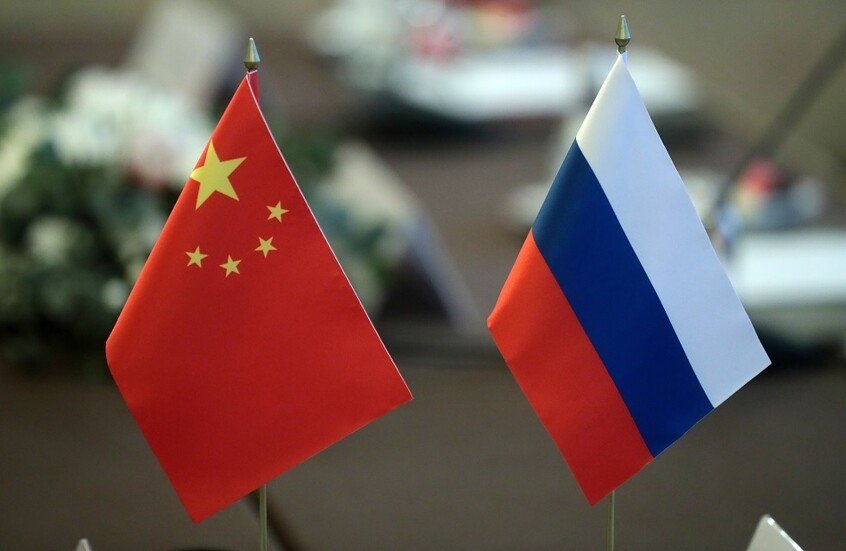
In recent days, the Chinese capital, Beijing, has witnessed intense diplomatic activity between Russia and China, reflecting the depth of the ongoing transformation in relations between the two countries. A series of high-level meetings were held between Chinese President Xi Jinping and Russian Prime Minister Mikhail Mishustin, along with sessions involving both countries’ foreign ministers and senior government and economic officials. The declared objective is to expand economic and trade cooperation and strengthen political and security coordination in an international environment that both sides describe as unstable and unbalanced.
Economic Issues at the Forefront
The discussions focused on developing mechanisms for trade exchange outside the Western system, expanding transactions in local currencies, and reducing dependence on the U.S. dollar. Both sides agreed to accelerate cross-border infrastructure projects, including the development of land and rail corridors and improving transport capacity between Russia’s Far East and northern Chinese provinces. The two sides also addressed energy cooperation, particularly the “Power of Siberia 2” project, which is expected to boost Russian gas supplies to China in the coming years. The talks further covered cooperation in space exploration, high technology, and joint industrial investment.
Growing Political and Security Coordination
Both parties reaffirmed their commitment to intensifying coordination on international positions. Xi Jinping stated that China regards its partnership with Russia as a “strategic and consistent choice,” emphasizing the protection of shared interests in the face of external pressure. Mishustin, for his part, stressed that Russia views cooperation with China as a guarantee of stability in a rapidly changing world, confirming that Moscow and Beijing engage with each other on the basis of full trust and equality. This rhetoric reflects a shared desire to consolidate their status as a balancing force to Western influence, without declaring a formal military alliance.
Official Statements Reflect Deep Understanding
The Russian Foreign Ministry described the talks as “constructive and effective,” noting the launch of new projects in industry, energy, and scientific research. Meanwhile, the Chinese Foreign Ministry emphasized that comprehensive cooperation between the two countries has become a key element in maintaining international stability. The meeting between Foreign Ministers Sergey Lavrov and Wang Yi also addressed sensitive regional issues, particularly the Ukraine conflict and developments in East Asia, with both sides underscoring the need for continued coordination in international organizations to align their positions.
Mutual Interests and Strategic Motives
Reports indicate that Moscow seeks through this rapprochement to compensate for losses in European markets and Western sanctions by deepening cooperation with China, which it views as a pivotal economic partner. For its part, Beijing benefits from securing stable energy sources and acquiring Russian industrial and technological expertise, while maintaining a balanced relationship with the West. The outcomes suggest that the Russian–Chinese partnership is moving toward establishing a broad economic base supported by a solid political framework.
Conclusion
It can be said that the recent talks in Beijing were far from ceremonial; they represent a new stage of deep understanding between Moscow and Beijing. All indicators show that both countries are advancing toward building a long-term framework of cooperation that combines economic interests with political coordination, without forming a formal alliance. As global shifts continue, the coming months are expected to bring more detailed agreements, especially in the fields of energy, trade, and technology—making this rapprochement one of the most significant geopolitical developments in Asia in 2025.
source: Asian Affairs
About the Author