BAQEN, Xizang, Oct. 26 (Xinhua) — Three days after the 7.0-magnitude earthquake damaged his home, Tsewang Khangshi was busy moving folding beds and quilts into his temporary new home.
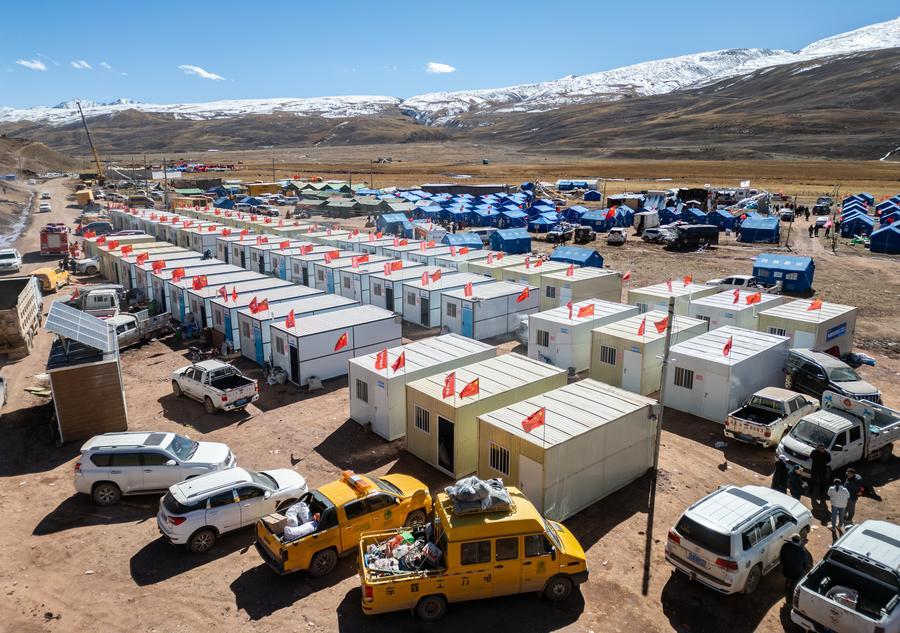
On Sunday, the 36-year-old villager from Baqen County moved from a tent to a prefabricated house, which rescue workers had rushed against the clock to build in the wake of the quake that struck on Oct. 22, killing 16 people and injuring 76 others.
More than 12,000 residents were evacuated, and 339 homes and 20 livestock sheds were damaged or destroyed, according to local authorities.
Baqen County in southwest China’s Xizang Autonomous Region, the epicenter of the earthquake, perches at an altitude of nearly 4,800 meters. Tiding over the cold winter has been a top concern for displaced residents like Tsewang Khangshi.
Large quantities of disaster relief supplies had arrived in the disaster zone in batches. As of 11 a.m. on Oct. 24, 52,450 items or sets of disaster relief supplies had been sent to the quake zone, including 4,651 tents, 2,000 prefabricated houses, 11,772 folding beds, 5,715 quilts and other cold-weather necessities.
Within five hours of the earthquake, the first tents had been erected. All affected residents, including Tsewang Khangshi’s family, had moved into temporary tent shelters by Oct. 23.
His family moved into a prefabricated house on Oct. 25. “We are so happy we can move into a prefabricated house,” he said, packing quilts, clothes and folding beds into his vehicle — all relief supplies delivered in the immediate aftermath of the quake.
The high altitude, low temperatures and strong winds have posed challenges for both residents and rescue workers. Gusts reached up to 13 meters per second, making it difficult to keep warm, particularly at night.
To provide better protection against the harsh weather, construction teams and power workers have worked around the clock to build sturdier, warmer temporary homes.
The first 60 prefabricated housing units in the earthquake zone were completed at 2:10 a.m. on Oct. 25, and electricity was connected to the units by 8 p.m. on the same day.
“We will ensure that affected residents have safe shelter, warm clothing and bedding, hot meals and clean drinking water,” said Pan Zhiqing, Party chief of the Nagqu Municipal Emergency Management Bureau. “As more prefabricated units are completed, we will gradually move residents out of tents and into better-heated housing.”
As the new housing units became available, families began moving in, cleaning their rooms and arranging furniture. The sound of people carrying belongings and chatting filled the settlement in the afternoon sunshine.
Outside, workers went from door to door, checking electrical wiring and the sealing of windows and doors against drafts. “All the prefabricated houses are fitted with chimneys for stove use, and we must ensure residents can stay warm through the winter,” said Zhang Xuhui, a construction team leader with China Railway. ■
المصدر: english.news.cn
About the Author