by People’s Daily Online –
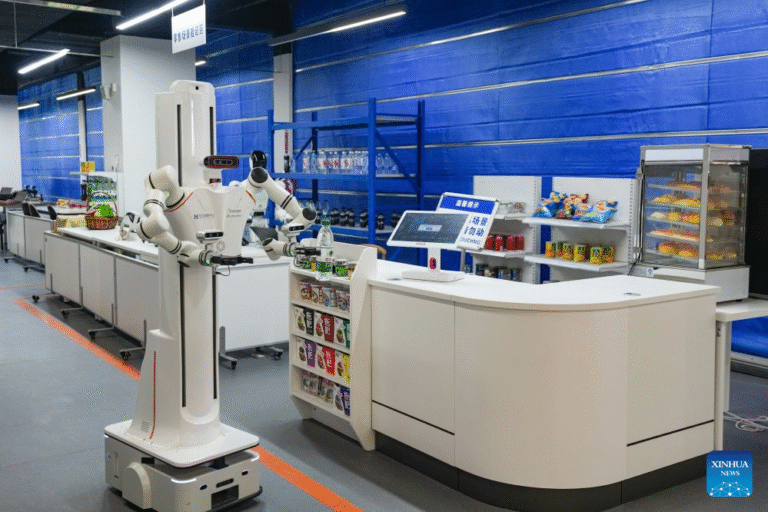
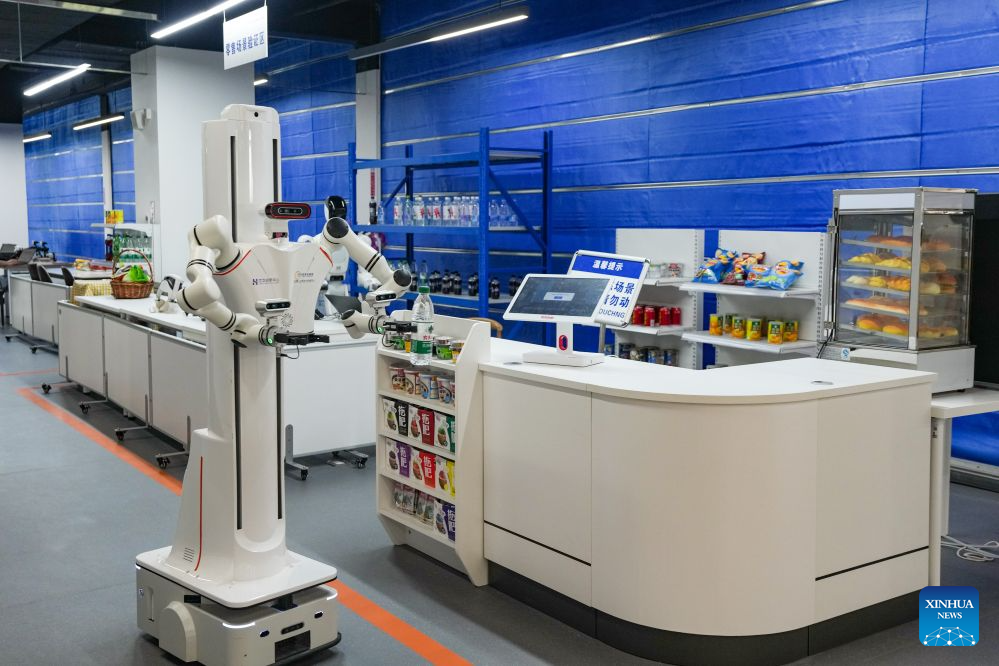
At Zerith Robotics in Ziyunshan Industrial Park, Baohe district, Hefei, east China’s Anhui Province, an unmanned retail store occupying just over 10 square meters immediately catches the eye.
As a visitor gives a voice command, “Xiaomai,” a wheeled robotic arm, smoothly turns toward the shelves, identifies the requested item through its multimodal perception system, picks it up with its robotic gripper and delivers it to the pickup window. While customers wait, it can also chat with them, making the experience more engaging.
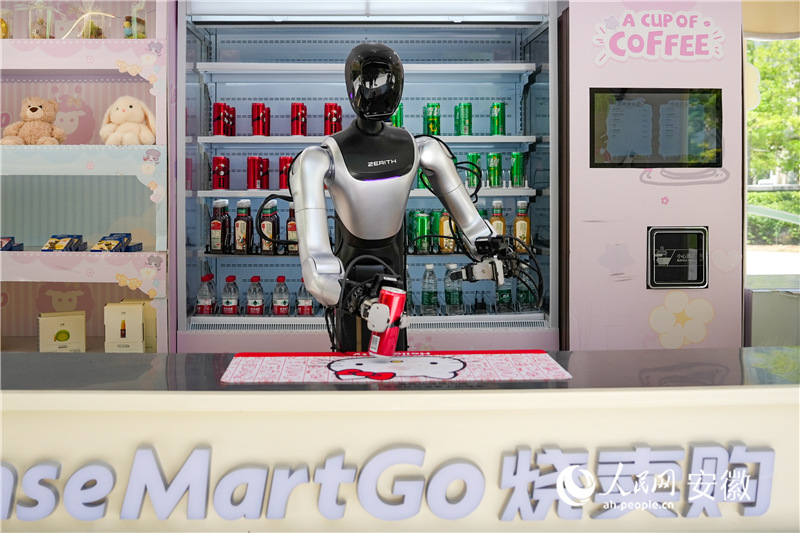
A robot hands a drink to a customer at the smart retail store of Zerith Robotics in Ziyunshan Industrial Park, Baohe district, Hefei, east China’s Anhui Province. (People’s Daily Online/Miao Zijian)
Designed for the retail market, the smart store has become the company’s key development focus this year.
A common challenge across the robotics industry has become increasingly apparent: many robots perform smoothly in quiet exhibition halls but struggle to operate reliably in crowded, ever-changing retail environments. For Zerith Robotics’ R&D team, the task was to move beyond demonstration robots and develop a commercially viable business model.
“New technologies can’t stay in the lab. Real-world retail settings are the best test of commercialization,” said Huang Rui, assistant to the general manager of Zerith Robotics.
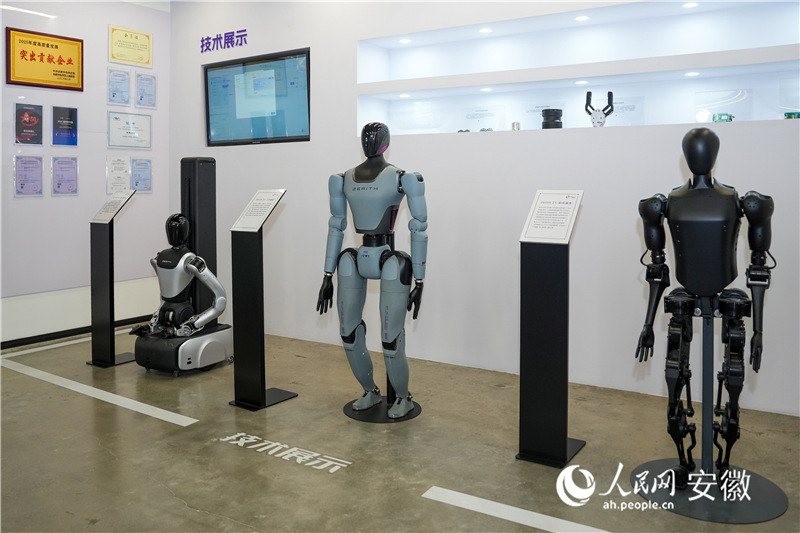
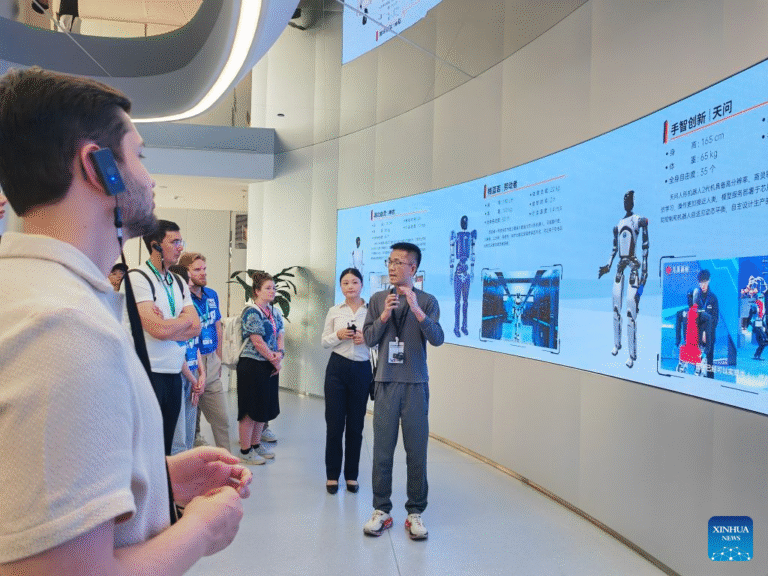
Photo shows robots developed by Zerith Robotics in Ziyunshan Industrial Park, Baohe district, Hefei, east China’s Anhui Province. (People’s Daily Online/Miao Zijian)
The company’s core R&D team comes from Tsinghua University. Its self-developed robots previously focused on cultural tourism and science education, with interactive calligraphy robots deployed in museums and exhibition halls across China, generating a steady stream of orders. Rather than remaining in that niche, the team redirected its R&D efforts this year toward the offline retail market.
Retail environments are far more complex than static exhibition halls. Constant foot traffic, frequently changing product displays and long hours of continuous operation place demanding requirements on robots’ autonomous obstacle avoidance, adaptive grasping and endurance.
To meet these challenges, the R&D team repeatedly visited shopping centers to study retail operations, identify pain points and continuously refine the ZERITH-H1 robot’s algorithms and robotic arm control system.
During a demonstration, Fang Yulong, director of the company’s operations center, showcased the system’s advantages. A standardized robotic retail store can be deployed within a week without extensive site renovation. The robot can autonomously retrieve and deliver beverages, snacks and freshly brewed coffee, while supporting additional customized retail formats.
The system also integrates order processing with inventory management. Out-of-stock items are automatically synchronized with the backend, enabling round-the-clock unattended operation while reducing labor and renovation costs for retailers.
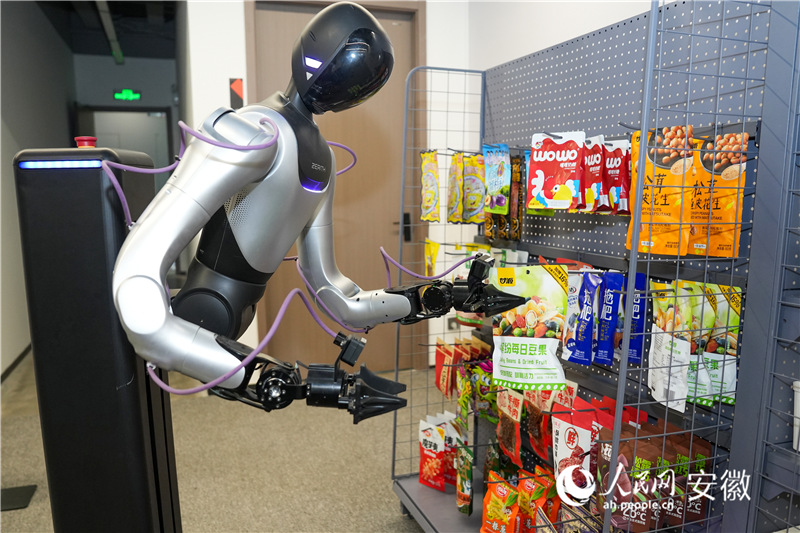
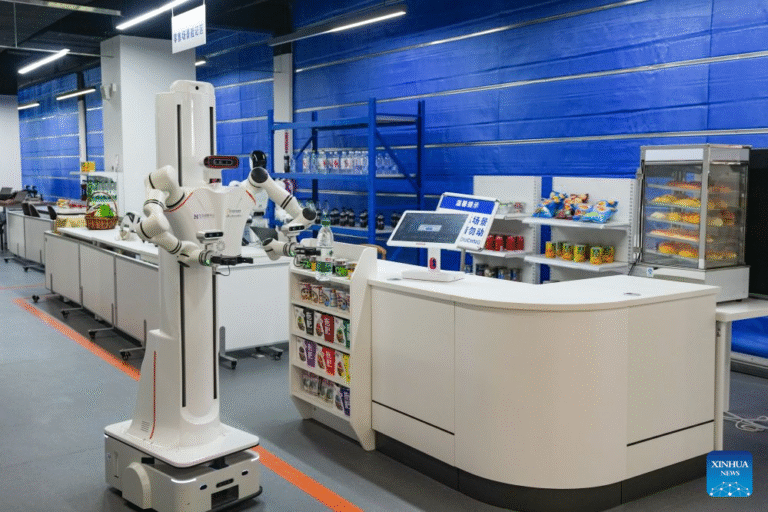
A robot demonstrates its capabilities in a retail setting at Zerith Robotics in Ziyunshan Industrial Park, Baohe district, Hefei, east China’s Anhui Province. (People’s Daily Online/Miao Zijian)
According to Huang, the vast amount of operational data generated in real retail settings continuously feeds back into the company’s database, driving further algorithm improvements.
In March, the robotic retail model debuted in Shanghai’s Baoshan district, with three pilot stores opening simultaneously. During the May Day holiday, the pilot stores delivered impressive results. The top-performing store recorded weekly sales exceeding 20,000 yuan (about $2,955.44).
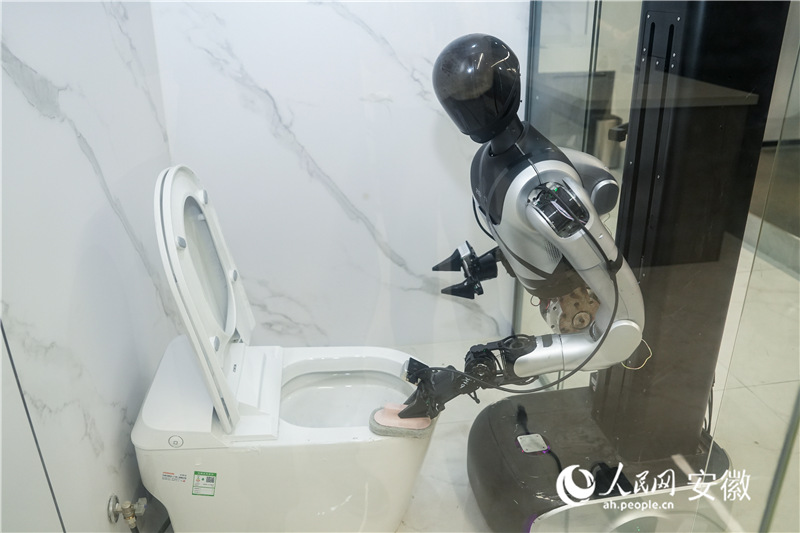
A robot demonstrates cleaning functions at Zerith Robotics in Ziyunshan Industrial Park, Baohe district, Hefei, east China’s Anhui Province. (People’s Daily Online/Miao Zijian)
About the Author