
Asian Affairs – Special:
Weeks after the outbreak of war between the United States and Israel on one side and Iran on the other, a clearer picture is gradually emerging of the military, economic, and political losses suffered by both sides.
Despite the military superiority that Washington and Tel Aviv attempt to project, developments on the ground indicate that the war has not come without significant costs, whether in terms of military personnel or in the broader economic and regional stability context.
International media reports have spoken of deaths, prisoners, and massive financial costs, in addition to wide-ranging impacts on energy markets and air navigation, reflecting the scale of the burden that the United States and Israel have begun to bear since the first days of the conflict.
Reuters: Military losses and increasing pressure on U.S. forces
According to a report published by Reuters on developments in the war, U.S. forces deployed in the region were subjected during the first days of the confrontation to a series of missile and drone attacks targeting military bases and strategic sites.
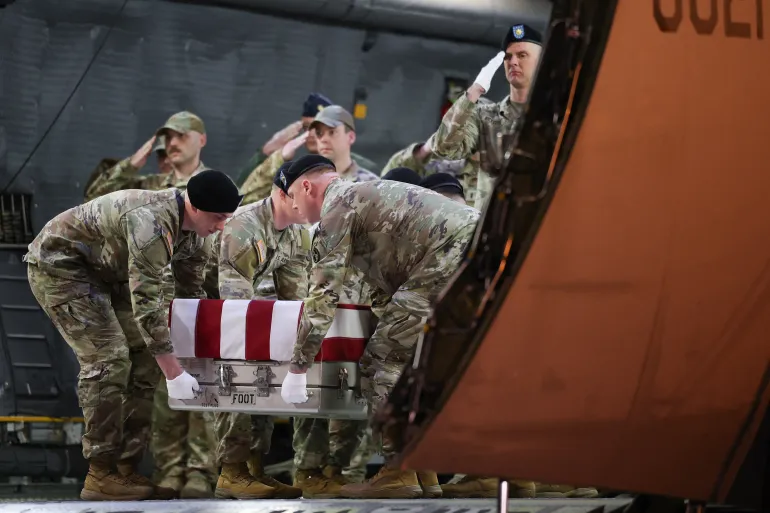
The report indicated that there were deaths and injuries among U.S. forces and their allies as a result of these attacks, in addition to direct strikes on military facilities, reflecting the ability of Iran and its allies to target American military interests at several locations across the region.
The report also pointed out that the expansion of the clashes and the opening of multiple fronts are increasing operational pressure on the U.S. military, which has been forced to strengthen its air defenses and protect its bases across the Middle East.
Targeting U.S. bases in the Gulf
Among the most prominent losses in the early days of the war was the targeting of several U.S. military bases in Gulf countries, a development that reflects the widening scope of the confrontation beyond Iranian territory.
Media reports indicated that bases used by U.S. forces in the region were targeted with missiles and drones, causing damage to some military facilities and raising the level of alert within those bases.
These bases are considered among the most important centers of U.S. military deployment in the Middle East, from which many air and naval operations are launched.
Strategic losses from attacks on bases
The significance of these attacks is not limited to material damage alone but extends to their strategic dimension, as striking U.S. bases in the Gulf represents direct pressure on the American military deployment network in the region.
It also imposes additional challenges on U.S. forces, which are now compelled to strengthen air defenses and spread their forces more widely to protect bases and military facilities, increasing the cost of military operations and complicating the management of the war.
Debate over the fate of U.S. special forces
Among the developments that have drawn wide attention in the media are reports of military operations during which U.S. special forces suffered losses or were surrounded during field missions.
Media reports have also discussed information suggesting that members of special forces, including elite units, were caught in complex combat situations during operations inside conflict zones, raising questions about the real scale of losses that Washington may not fully disclose in the early stages of conflicts.
Such incidents indicate that ground or special operations against Iran are not easy, particularly given the complex combat environment in the region.
Huge financial cost of the war
In addition to military losses, the United States is bearing a growing financial burden as a result of intensive military operations against Iran.
Estimates cited by media reports suggest that the cost of U.S. military operations could reach around one billion dollars per day if the war continues at the current pace, due to the use of warplanes, long-range missiles, aircraft carriers, and military bases.
These costs also include deploying additional defense systems and reinforcing U.S. forces in the Middle East, which significantly increases the overall cost of the conflict.
Israeli losses under missile attacks
Israel has also not been spared from the repercussions of the war, as it has been subjected to several missile and drone attacks during the first days of the confrontation.
These strikes forced Israeli authorities to raise the level of military alert and intensively activate air defense systems, in addition to disrupting daily life in some areas due to repeated warning sirens.
The war has also placed security and economic pressure on Israel amid continued missile threats and the widening scope of the confrontation.
Broader strategic repercussions
Observers believe that the war with Iran could turn into a strategic burden for the United States, especially if it becomes prolonged or expands geographically.
Engaging in a wide conflict in the Middle East could drain American military and economic resources and create additional challenges at a time when Washington faces increasing international competition in other parts of the world.
The continuation of mutual strikes could also open the door to broader regional escalation that threatens stability in the region and further complicates the geopolitical landscape.
Conclusion
The data presented in international reports, particularly the Reuters report, indicate that the war against Iran has not been a low-cost confrontation for the United States and Israel. With the continuation of mutual attacks and strikes, military and financial losses are increasing, and strategic pressure on both sides is expanding.
With no clear signs of a near end to the conflict, the cost of the war appears likely to rise further, potentially altering the calculations of many actors in the coming period.
About the Author