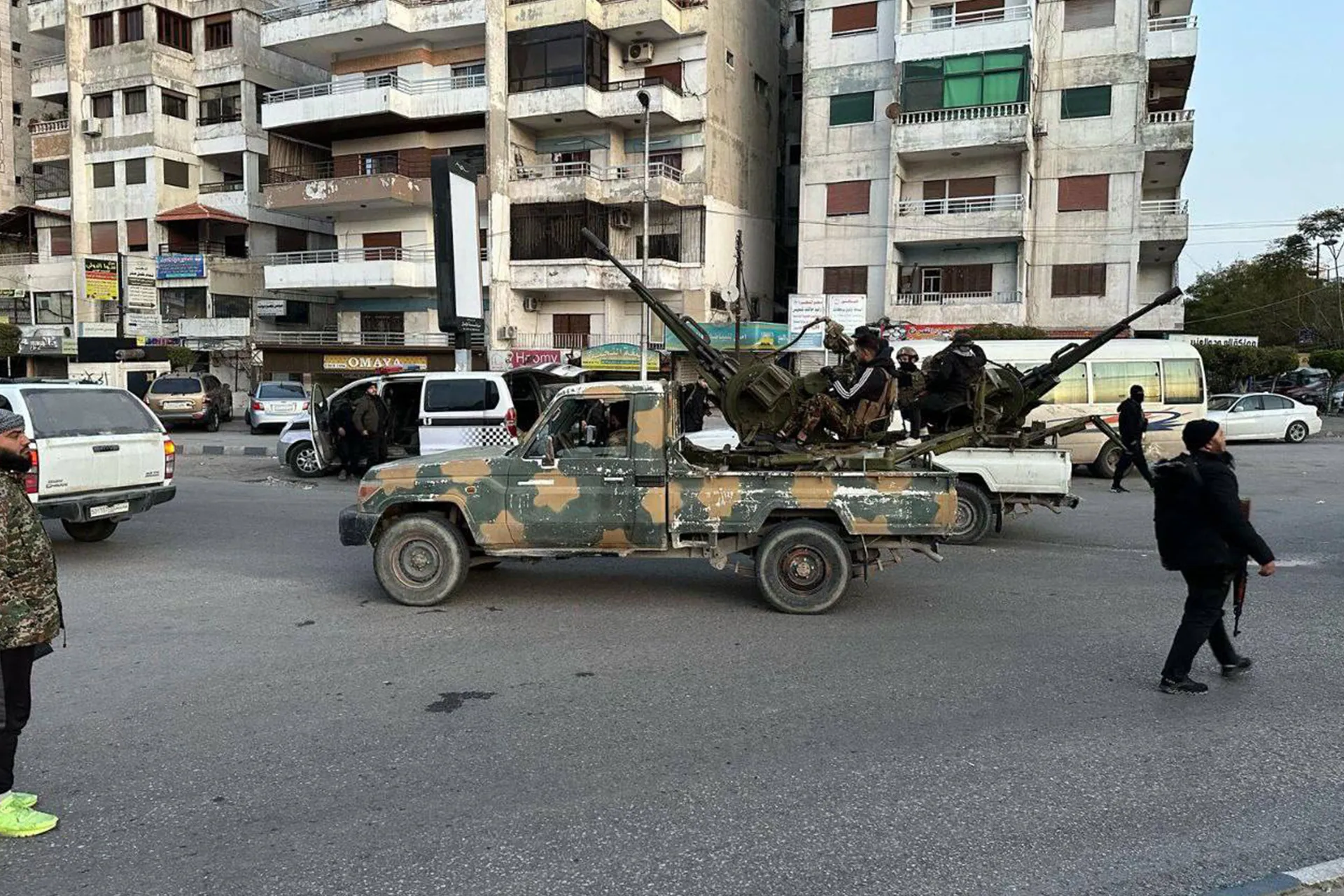
As 2025 draws to a close, Syria’s security landscape appears more fragile and fragmented than at any time since the decline of large-scale military operations.
Levels of tension vary from region to region, but the common thread is the weakness of the rule of law and the absence of accountability, turning isolated incidents into indicators of systemic breakdown.
Syrian Coast: Child Kidnappings and Rising Crime
In Latakia and Tartous, kidnappings have risen sharply in recent months.
The most notable case was the abduction of 13-year-old Mohammad Qais Haidar on October 8 in front of his school in Latakia’s Tenth Project neighborhood by unidentified men. His family has received no contact or information from authorities.
The incident sparked public outrage, leading to school closures for two days in protest over worsening security.
Human rights reports, including one by Amnesty International, documented dozens of kidnappings throughout 2025 targeting women and children in coastal cities, amid accusations of negligence or complicity by security agencies.
Locals report a resurgence of ransom-for-kidnapping networks and continued official silence.
Homs: Sectarian Assault on Educators
In mid-October, a teacher and school principal in the Bayyada district of Homs were beaten and insulted in front of students in an incident with sectarian overtones.
Local media coverage of the attack provoked widespread anger and calls from teachers for protection guarantees in schools.
Authorities issued only a brief statement announcing an “ongoing investigation,” which deepened communal tensions.
As-Suwayda: De Facto Siege and Humanitarian Pressure
Residents describe As-Suwayda as being under an undeclared siege.
Roads are intermittently closed, and prices of food and medicine have soared.
The government denies any official blockade, referring instead to “temporary logistical constraints,” while civil groups describe the situation as deliberate economic and security strangulation.
In October, short clashes occurred between local armed groups and government forces, mediated by community elders without lasting results.
Basic services continue to deteriorate and medicine shortages are acute.
Aleppo: Administrative Disorder and Security Clashes
Aleppo suffers ongoing instability due to recurrent clashes between government forces and local groups, some linked to the Syrian Democratic Forces (SDF).
Early October saw fighting in the city’s eastern neighborhoods, followed by a fragile Russian-brokered truce.
Administrative overlap between government agencies and local councils creates a power vacuum exploited by armed groups.
Residents face daily service outages, movement restrictions, and persistent fear of renewed violence.
Idlib: Persistent Tension and Risk of Escalation
Idlib remains tense. Armed factions control wide areas, while government troops hold nearby positions.
The UN and humanitarian organizations warn of potential mass displacement if fighting resumes.
Despite relative calm, the risk of escalation persists amid local and regional rivalries. Civilians live between the threat of renewed conflict and worsening living conditions in overcrowded camps.
Relations with the SDF: Fragile Understandings
Relations between Damascus and the SDF are in a delicate phase.
Despite publicized security coordination, clashes resumed in parts of Aleppo in early October before local mediation restored calm.
Main disputes center on control of crossings, resource sharing, and local governance.
Interim arrangements have not solidified, leaving the situation volatile.
Conclusion
Autumn 2025 confirms Syria remains far from security stability.
Kidnappings on the coast, sectarian incidents in Homs, siege conditions in As-Suwayda, disorder in Aleppo, tension in Idlib, and fluctuating ties with the SDF all reflect a fragile security structure.
No signs point to near-term improvement. The country remains effectively divided into competing zones of control, none capable of restoring full security or public trust.
Source: Asian Affairs
About the Author