Chinese women honored at UN exemplify power of women in rural revitalization
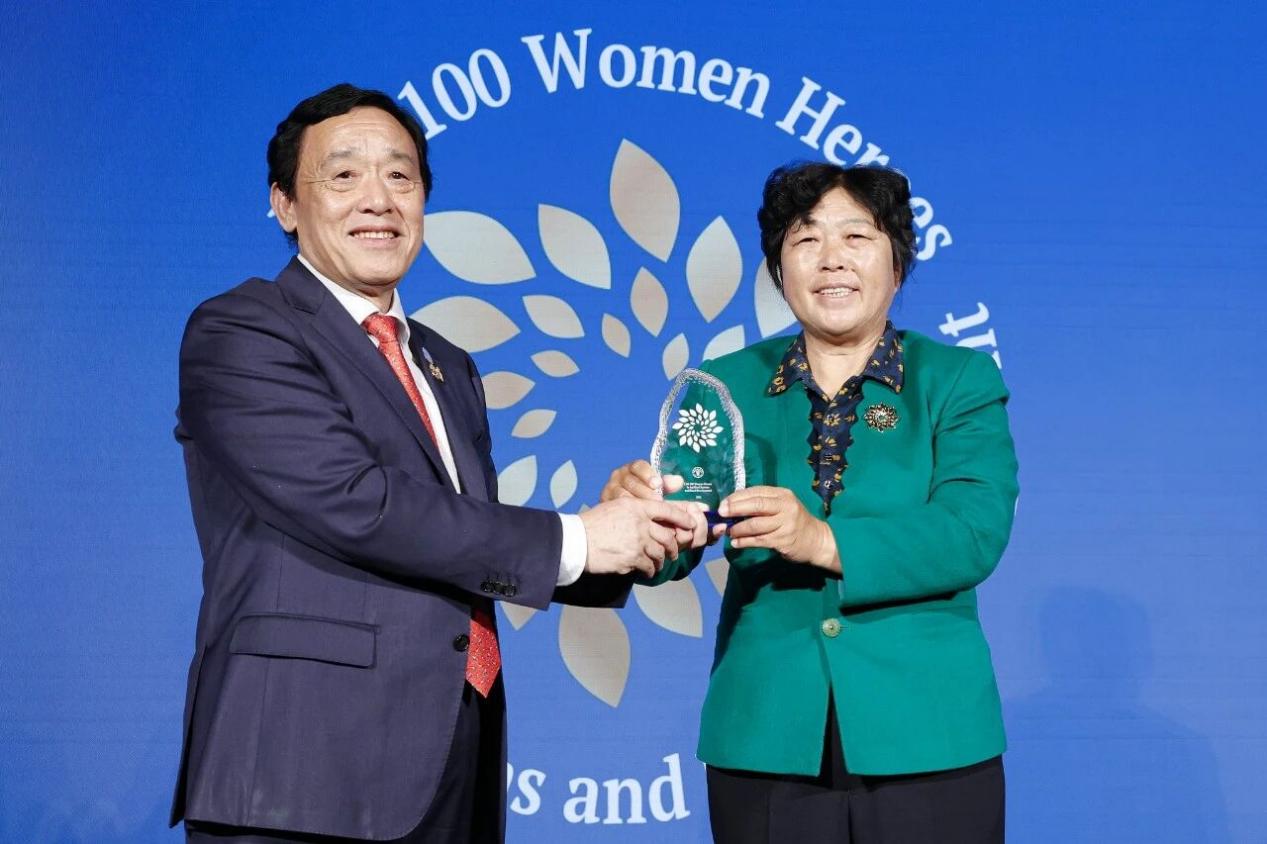
Qu Dongyu, director-general of the Food and Agriculture Organization of the United Nations (FAO), awards Chinese desertification fighter Yin Yuzhen (right) at the headquarters of the FAO in Rome, Italy. (Photo courtesy of the FAO’s WeChat account)
Recently, applause filled the Plenary Hall at the headquarters of the Food and Agriculture Organization of the United Nations (FAO) in Rome, Italy, as Chinese women were honored for their achievements.
A short documentary played on the giant screen, telling the story of a woman who has spent more than 40 years fighting desertification. When Yin Yuzhen, the film’s protagonist, stepped onto the stage to receive her award, the audience rose to its feet in applause.
Ronald Sakolsky, an American friend of Yin’s who had traveled to Rome for the occasion, was clearly moved. Choking back tears, he praised Yin’s unwavering dedication and called on everyone to plant a tree and work together to protect the environment.
The emotional moment unfolded at a ceremony honoring the FAO’s 100 Women Heroes in Agrifood Systems and Rural Development. Of the 609 nominees from 131 FAO member countries, 100 were selected for the honor. Three Chinese women — Yin Yuzhen, Dong Minfang, and Yu Jinxiu — made the list, giving China the highest number of honorees of any country.
Each woman has advanced rural development through distinct pathways. For more than 40 years, Yin has worked tirelessly to halt sand encroachment in the Mu Us Desert in the Inner Mongolia Autonomous Region. Dong Minfang left a lucrative urban career to return to her hometown, where she has championed grain production, promoted agricultural mechanization, and boosted smallholder incomes. Yu Jinxiu has dedicated over two decades to promoting Qichun moxibustion therapy — a nationally recognized intangible cultural heritage — training more than 30,000 practitioners and expanding the local mugwort industry to create employment opportunities for women, people with disabilities, and other underserved groups.
Though their methods differ, the three share a common mission: restoring degraded land, strengthening food security, and uplifting communities through perseverance and innovation.
At the ceremony, FAO director-general Qu Dongyu noted that women play a critical role across agrifood systems, from ensuring food security and managing natural resources to advancing rural development and strengthening community resilience.
Across China, the vital role women play in agriculture and rural development is reflected in countless real-life stories.
Women have been both a key focus of China’s poverty alleviation efforts and a driving force in advancing rural revitalization. They account for roughly half of the nearly 100 million people lifted out of poverty in China.
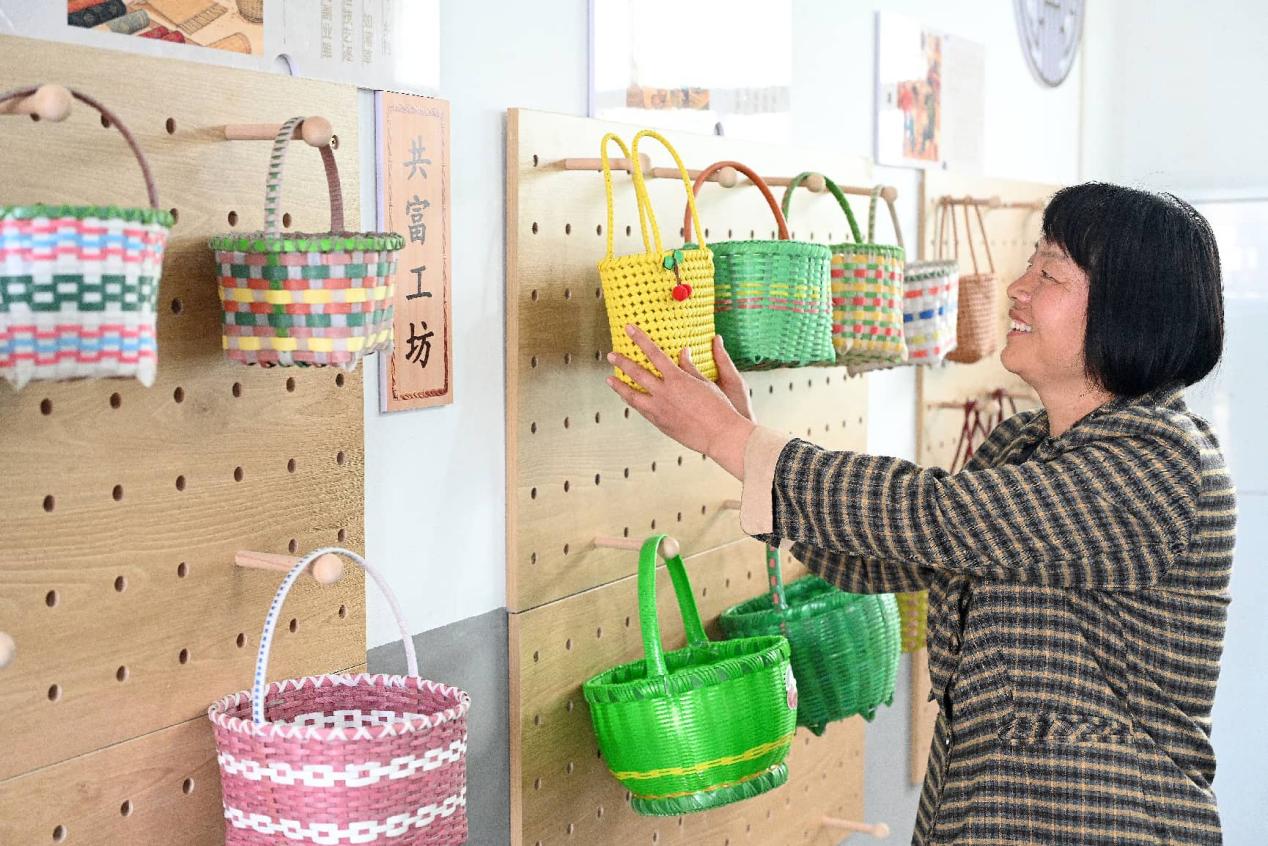
A villager displays handmade baskets at a common prosperity workshop in Matou village, Xin’an county, Luoyang, central China’s Henan province. (Photo/Zhang Guanghui)
According to data from the All-China Women’s Federation, women accounted for more than half of those engaged in family farming in 2023. They spent more time on average each year working in their own agricultural operations than men did. Their tireless work in the fields underscores the essential role women play in rural development.
These outcomes have been supported by targeted institutional measures. By the end of 2020, 10.21 million impoverished women and rural female leaders had completed vocational skills training. Over five million women escaped poverty through initiatives ranging from crop cultivation and livestock rearing to handicrafts, domestic services, and e-commerce.
Over 450 billion yuan (about $67.48 billion) in guaranteed microloans and poverty-alleviation microcredit had been disbursed to women in need and 8.7 million impoverished women had seen their income increased through entrepreneurship.
Countless rural women have helped combat desertification through afforestation, secured livelihoods through farming, and built enterprises in agricultural processing. In transforming themselves from economically disadvantaged villagers into catalysts of rural prosperity, they have not only improved their own lives but also generated enduring momentum for sustainable rural development.
The Outline for Women’s Development in China (2021-2030) calls for further efforts to improve rural women’s skills and capabilities and support their participation in agricultural and rural modernization. As supporting policies are put into practice, the protection of rural women’s rights and interests continues to be strengthened.
The achievements of rural Chinese women are also gaining recognition internationally. They bring the knowledge and experience gained from the field and farmyards to the international stage, offering the world a firsthand glimpse of China’s efforts toward poverty alleviation and rural revitalization.
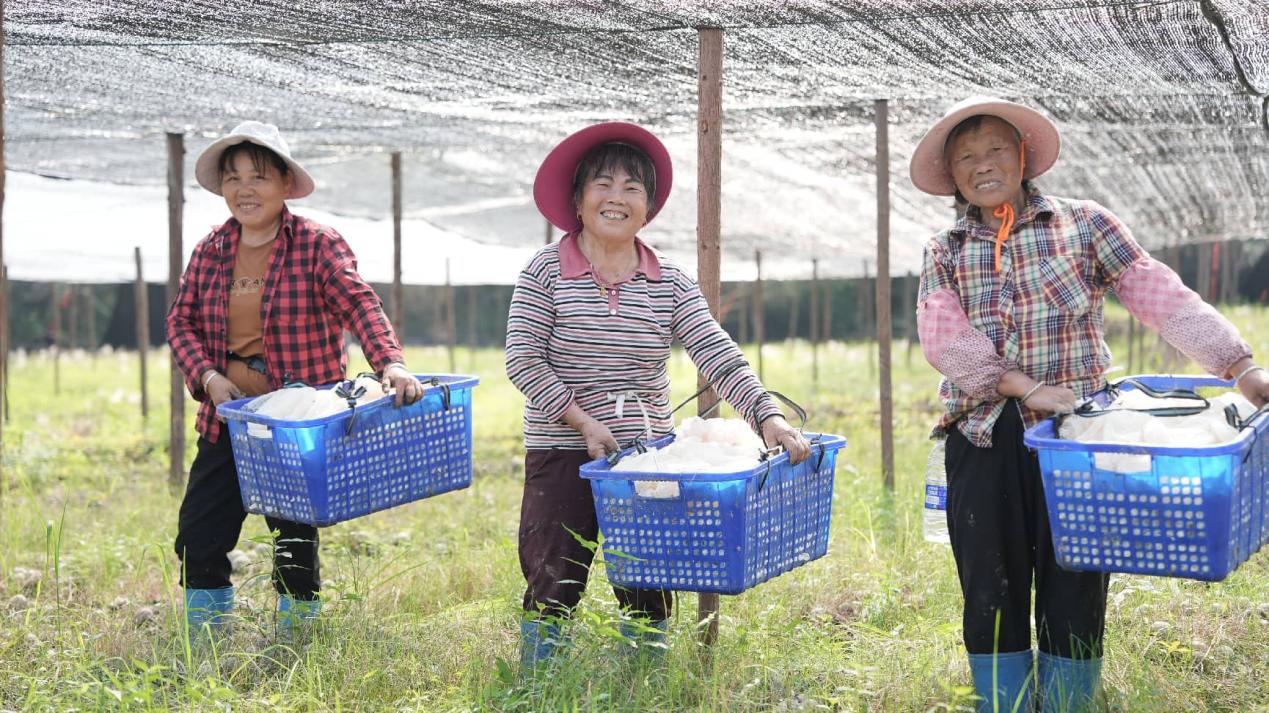
Farmers harvest bamboo fungus in Shaojia village, Yongfeng county, Ji’an, east China’s Jiangxi province. (Photo/Yuan Xuebin)
On the international stage, they share not only China’s stories, but also proven approaches that other developing countries can learn from and adapt, giving China’s grassroots solutions a wider reach and greater resonance in global development.
The recognition the three Chinese women received at the UN was not only a personal honor, but also a testament to the contributions of countless rural women across China who are deeply rooted in their communities. Across China’s vast rural landscape, women continue to make their mark, building on the achievements of those before them and opening new chapters in the story of rural women in China.
المصدر: en.people.cn
About the Author